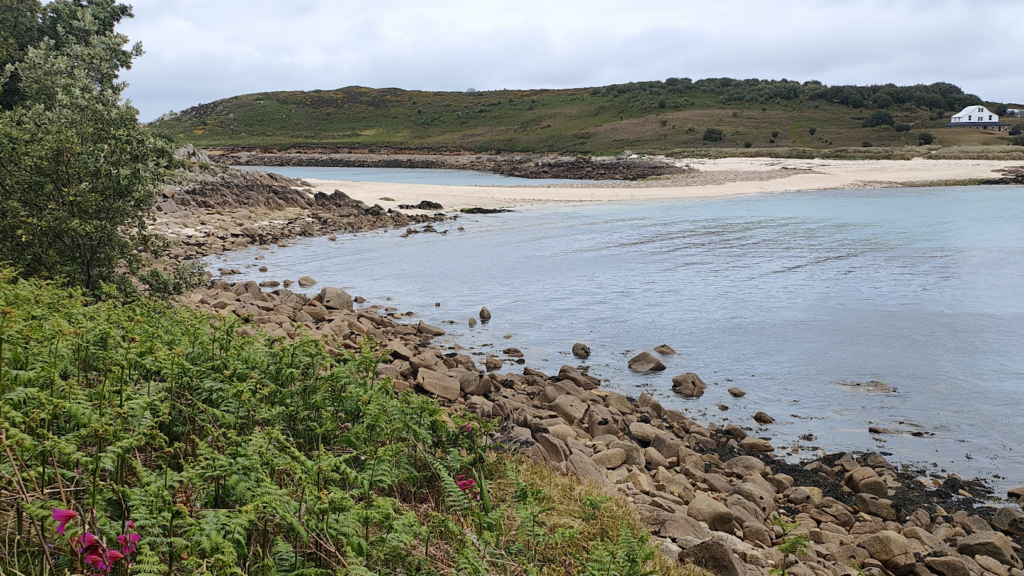
First day and first extremity – the most southerly inhabited place in the United Kingdom
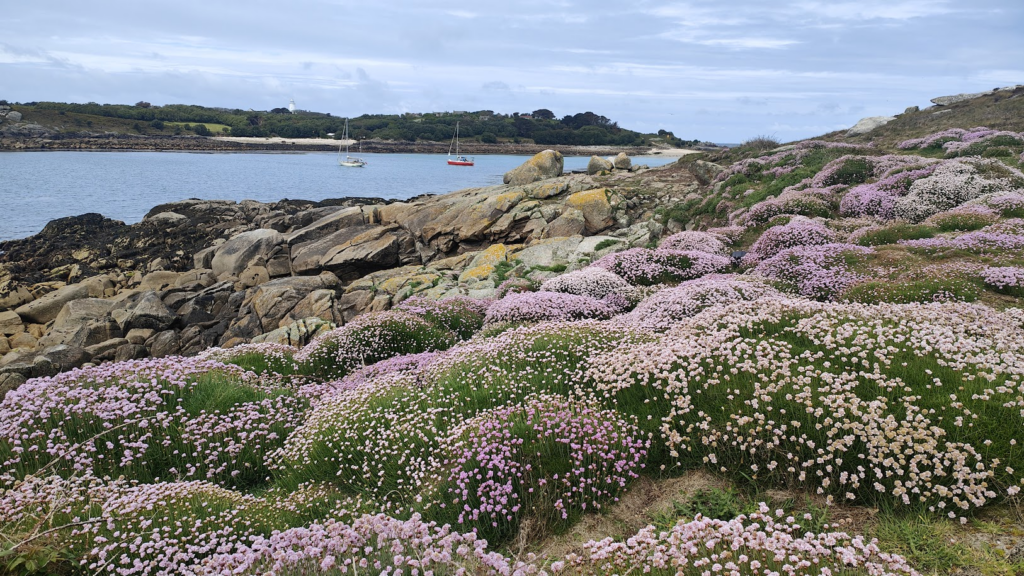
The archipelago of the Isles of Scilly is made up five main inhabited islands: St Mary’s, St Martin’s, Tresco, Bryher and St Agnes, as well as many smaller, uninhabited islands and rocks. They lie about three hours by ferry west of Penzance, and the crossing is notoriously choppy. The islands have long been renowned for shipwrecks and the shallow seas around them are treacherous. Each island has its own character, and rewards the visitor in different ways. All contain wonderful coastal walks, stunning empty white sand beaches, and enough opportunities for sustenance to make a fine day pass by quite easily.
Small boats make regular crossings every day – weather permitting – between the harbour in the main settlement of Hughtown on St Mary’s, the biggest island, and each of the inhabited “off-islands”. These colourful little boats are mostly open to the elements and low to the water, and are operated by the St Mary’s Boatmen’s Association, to a timetable that changes daily with the tides. The boats vary in size; but typically feel pretty full with around 80 people aboard. We allowed our plans to unfold with theirs, and the weather, and managed to get out to all of the inhabited islands by the end of the week. The third of these trips, on a bright, dry but blustery day, was to St Agnes. It is the most southerly inhabited place in the UK, 30 minutes or so across the shallow water from St Mary’s, and a different world.
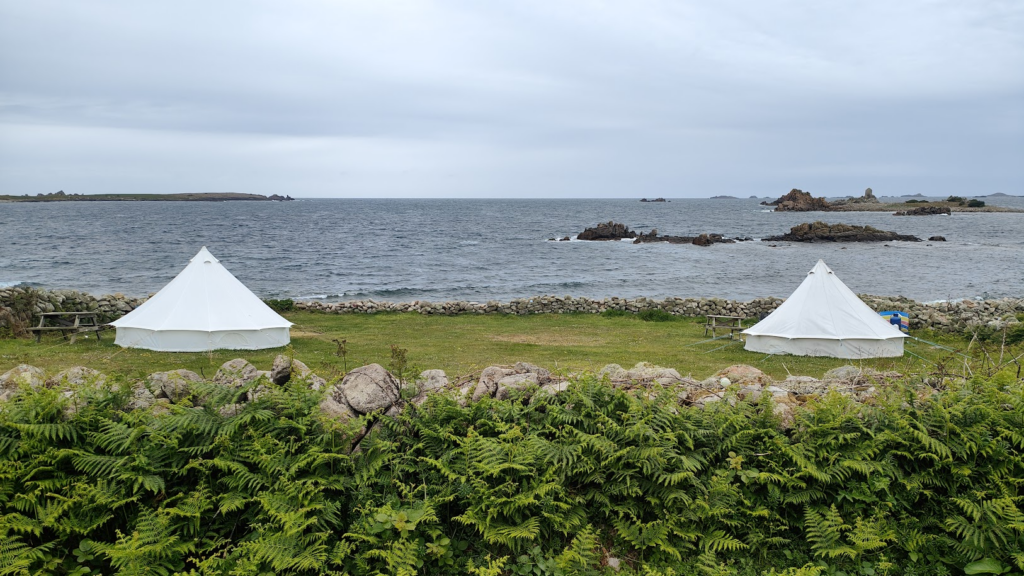
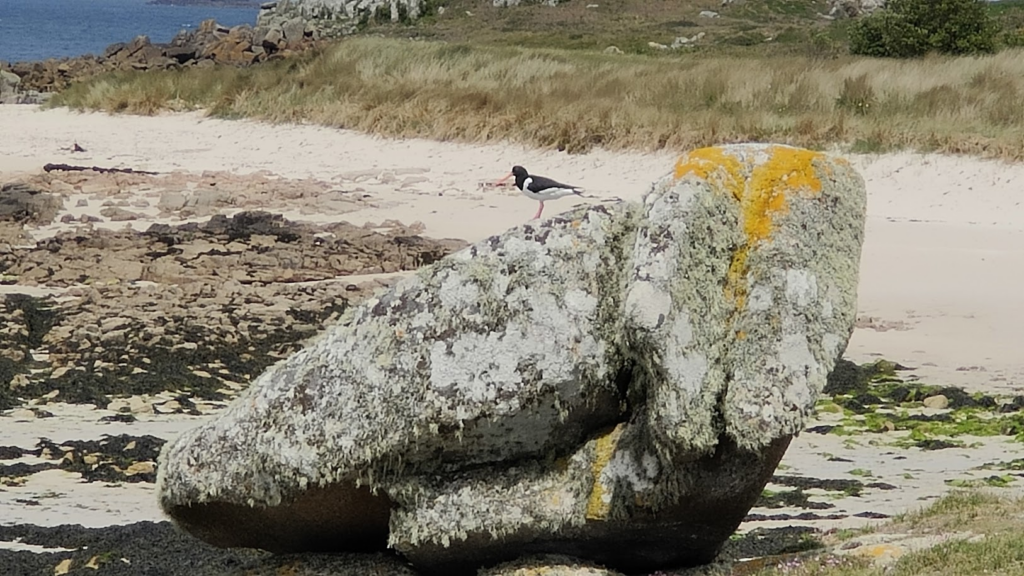
In the last census in 2011, the permanent population of St Agnes was 82. Our boat doubled that for a few hours. Barring a couple of tractors there are no vehicles, and almost nowhere to use one. Unlike the other islands, I didn’t see a single bicycle. There is a small church, a pub (The Turk’s Head), a shop, a tea room, a lighthouse, a tiny school, some cottages, a couple of artist’s studios, and a farm called Troytown, where you can camp right by the sea, and that makes and sells its own ice-cream. Otherwise the main interests are the wild coastal scenery, the white sand beaches and the sea-birds. There is also much evidence of pre-historic activity in the shape of many burial chambers, and a fascinating pebble labyrinth, which sits on low cliffs above the pounding sea. It is a peaceful, elemental place with a far-away feeling that must be much more profound during the winter months, when sea mists shroud the islands and there are few visitors.
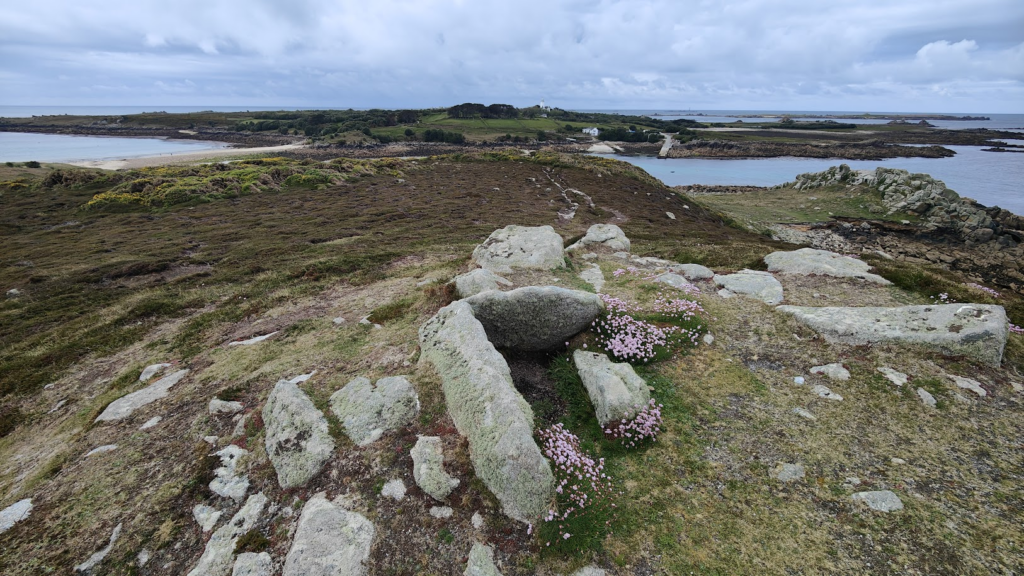
Of all the Scilly Isles, St Agnes felt the most remote and under-developed. The other four islands have hotels that attract upmarket clientele. Tresco has a uniquely manicured feel and caters to especially well-heeled visitors, many arriving by helicopter, to and from which they are shuttled in cute little electric buses. All lovely; but a world apart from St Agnes. The other “off-islands”, Bryher and St Martin’s, while far less showy, have a slightly gentler, less wind-swept feel.
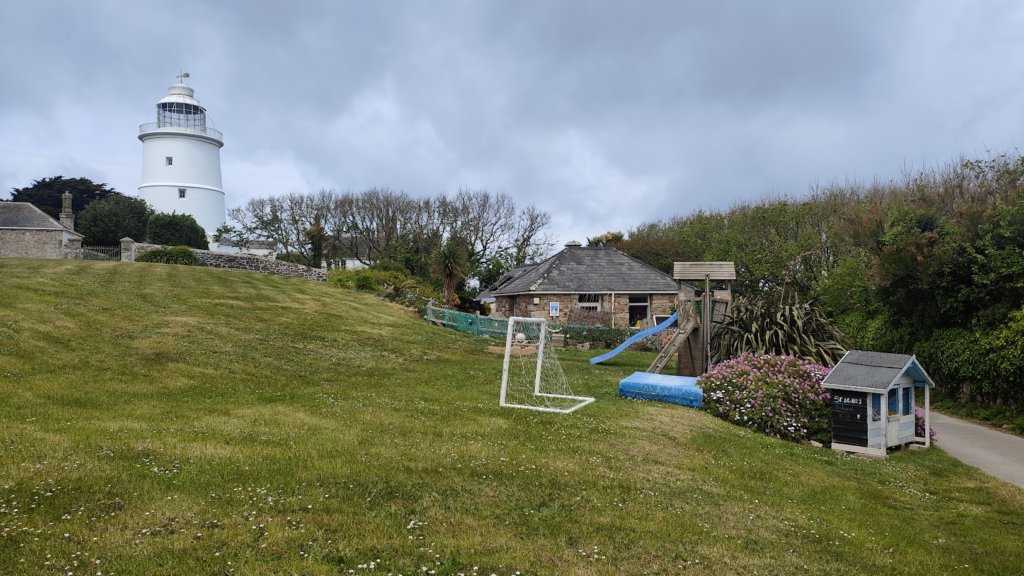
St Agnes itself is only about a mile across, and you can easily see all of it in a day on foot. However, either side of low tide, St Agnes is connected to its smaller sibling, Gugh (pronounced “Goo”), which is technically the sixth of the inhabited islands, with a resident population of three. When we arrived it was possible to walk safely across the sandbar tombolo. Before crossing, we ordered our Cornish pasties to collect for lunch in a couple of hours at the UK’s most southerly pub, and set out to do a full circuit of Gugh’s sea cliffs. Later, before we left St Agnes, the tide cut off Gugh. Some ladies on the boat over told me a story of how they had got wet up to their knees on a previous trip, after they got distracted and misjudged the tide on the sandbar. The water arrives quickly when it comes, and it is considered dangerous to attempt a wet crossing, so perhaps they were fortunate. Like most of the visitors we shared boats with this week, they were comfortably our senior, and our own average age was sixty. Scilly seemed to be that kind of place. There is little here for young people seeking excitement. But for the nature lover, and those seeking simpler pleasures, it is quite close to paradise. It made a fine place to begin an adventure connecting together the country’s extremities.