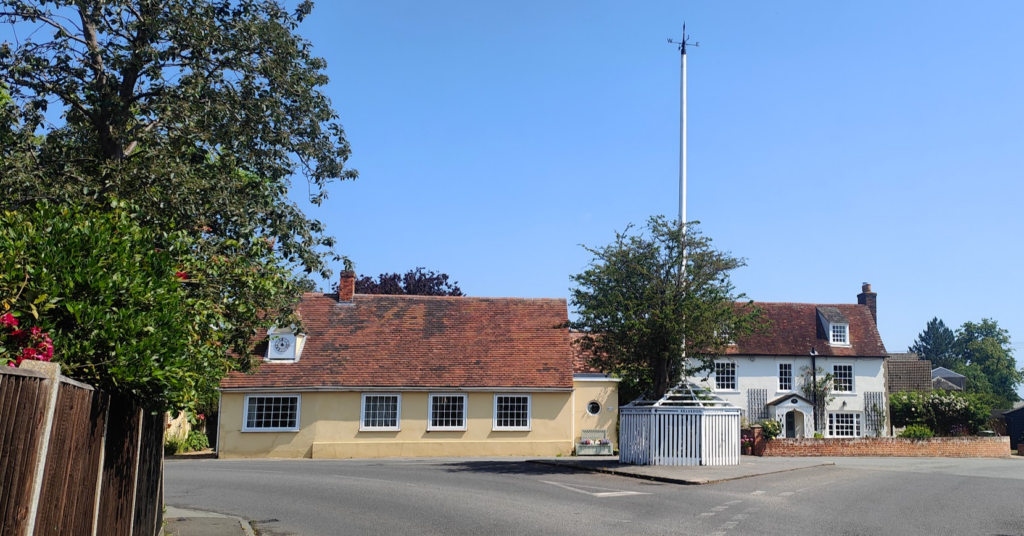
It was another oppressively hot day and I was being careful to manage how far I was attempting to cycle in these conditions, with regular rests. It certainly helped being nearer the coast, although nowhere here really felt quite like the seaside. The land was low and gently bumpy and nothing to write home about, but the villages were quite attractive and the roads I followed were acceptably quiet.
I was heading for Mersea Island, which is a lump of land linked by a bridge across tidal, muddy channels. At the western end is a small town and a few miles further east is a large country park, with views across the tidal River Coln to the small port of Brightlingsea, which glistened in the distance. The shoreline all around was steeply banked shingle. From the furthest tip of the island, a small passenger ferry makes a few trips a day, and I was one of two cyclists who pushed their bikes along the empty beach this low tide to reach the flag fluttering in the warm breeze at the end of the spit.
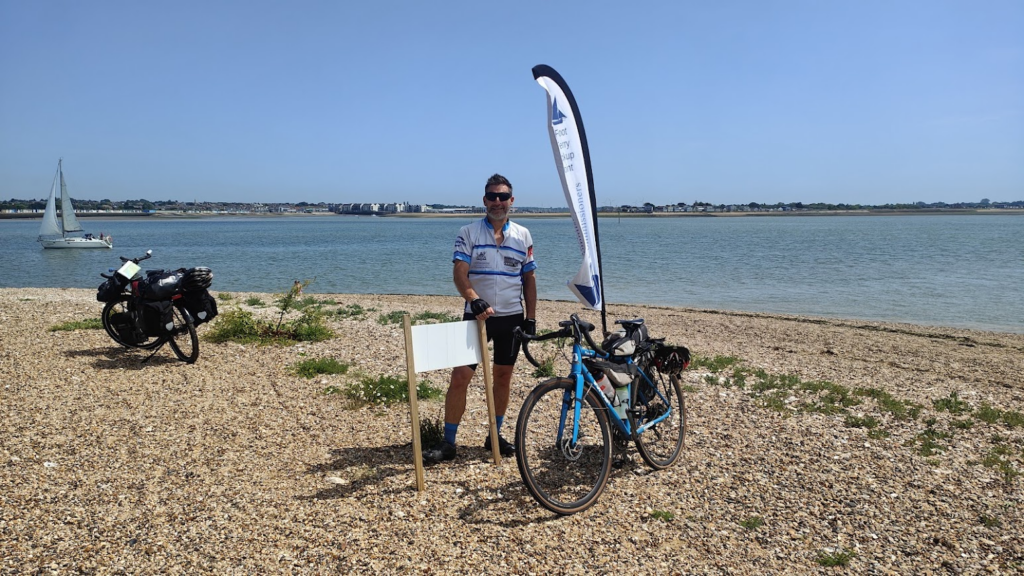
The other guy, a Dutchman, had a heavy bike and much heavy luggage upon it, which he was regularly cursing. I’m an aficionado of ferries, but this one was like nothing I had seen before. A small, flat bottomed metal boat drew up from across the river and lowered a ramp onto the beach below the shingle bank. We had to scramble our bikes and luggage steeply down through the piles of loose stones to board. There was no dock or other infrastructure, but we were assisted through the deep drift of pebbles by gravity and made it safely aboard to the friendly ferryman, who held the craft steady.
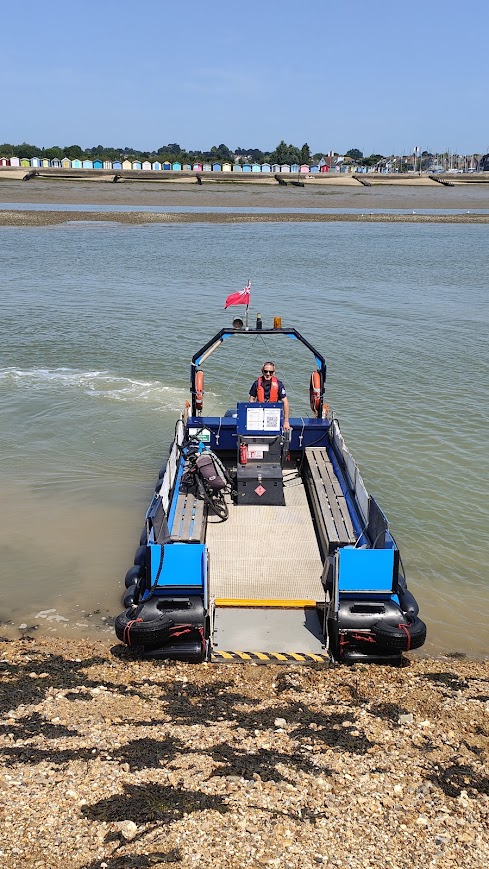
On the other side was a choice of two exit points. The Dutchman was out first at a stop closer to the open sea, where he was carrying on towards Frinton and Clacton. His departure point was much like the one we had entered from, and it was literally beyond him to get his bike up the shingle bank. In the end it took two of us using all of our strength to scramble it up. I don’t know what he would have done otherwise. The ferryman seemed amused.
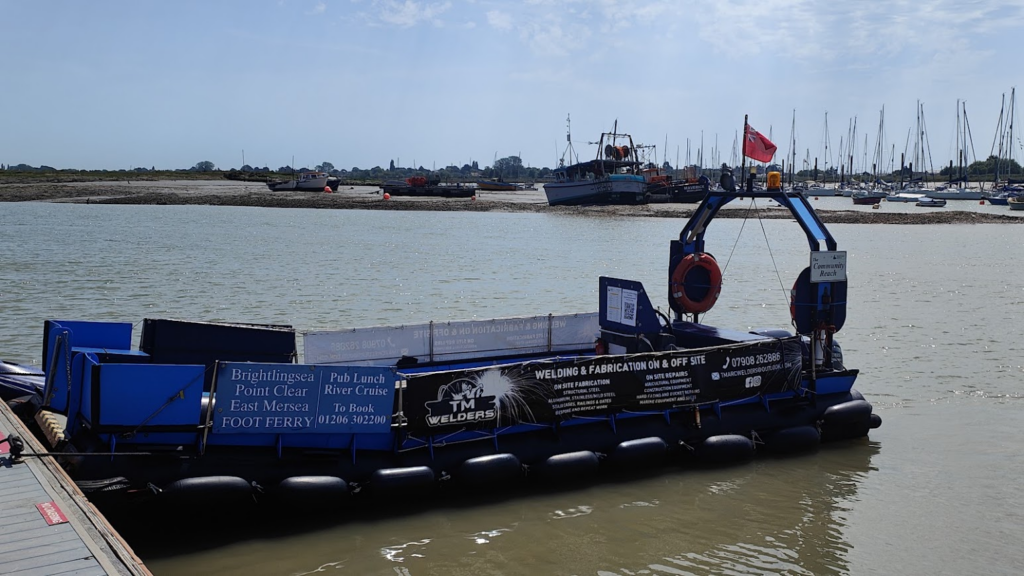
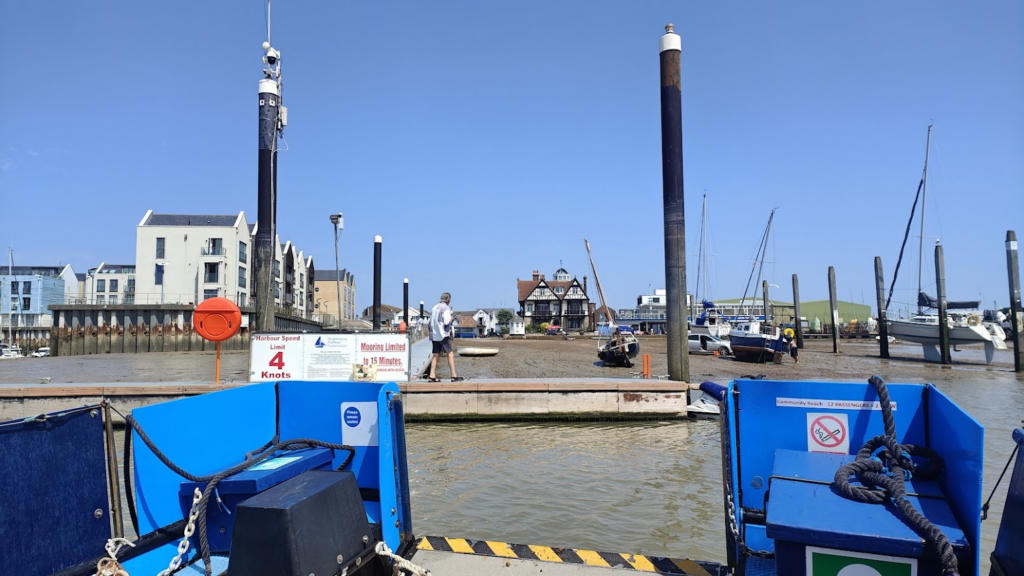
My stop, Brightlingsea, was a low rise mixture of old red brick buildings, modern waterfront apartments around a new looking marina, and a long line of colourful beach huts. It looked a picture from the water, glowing in the sunshine. Very little was moving. The water around here is shallow and full of mud banks and a jet skier had got himself into difficulty. He needed the help of the ferry and other local people to get himself out of the water, and he had cut himself quite badly.
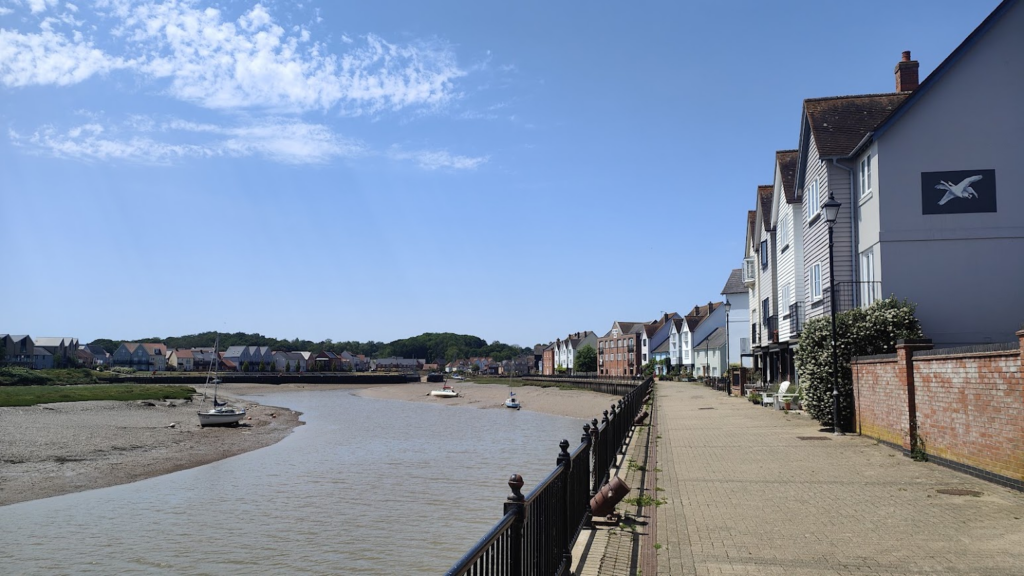
Leaving them to sort out this minor crisis, I pushed on upstream a few miles towards Colchester, to a delightful village called Wivenhoe, which has an old fashioned waterfront of small boats – mostly sitting with their keels in the mud while the tide was out – and warehouses, as well as the quaint lunchtime pub I was confident of finding. It was a lovely place to sit out under the shade of a large umbrella and enjoy some superb modern cooking. Very civilised indeed.
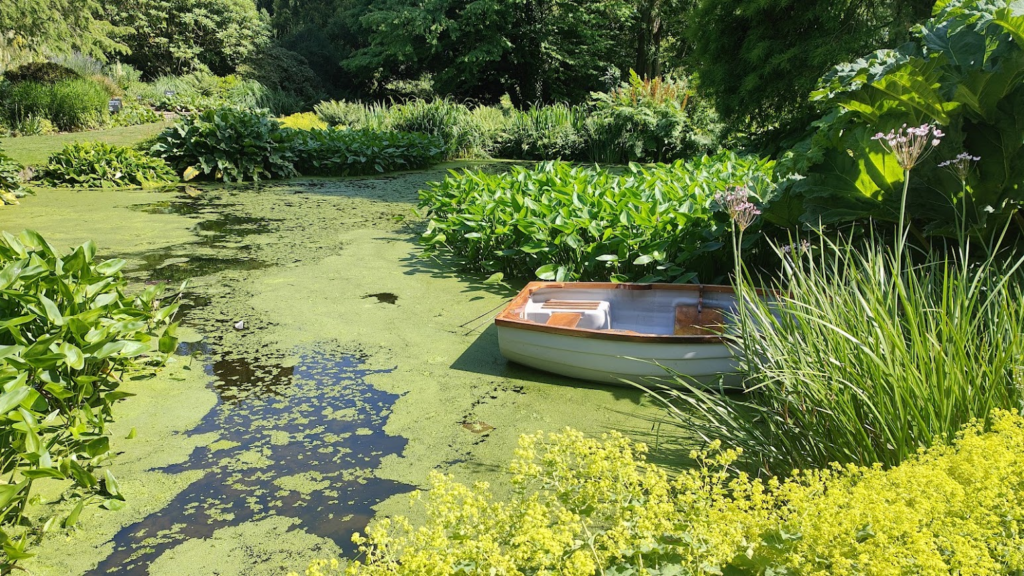
I was now not terribly far from Harwich, but even closer to a famous garden called Beth Chatto, after the lady who created it. I opted to make a relaxing stop for a couple of hours, and also to try out their tea room! It was all much to my liking, with a series of ponds joined by a gurgling stream, and some pleasant shady places to sit and relax. This part of England is known for its relatively low rainfall, and parts of this garden are an experiment in growing drought hardy plants. All in all it was a good use of my time in a piece of the country I rarely reach.
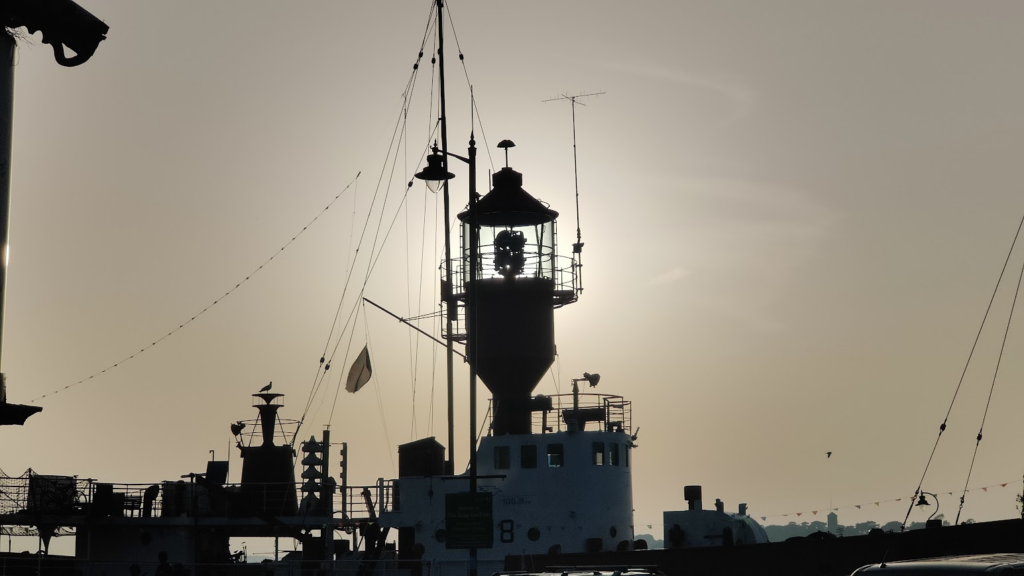
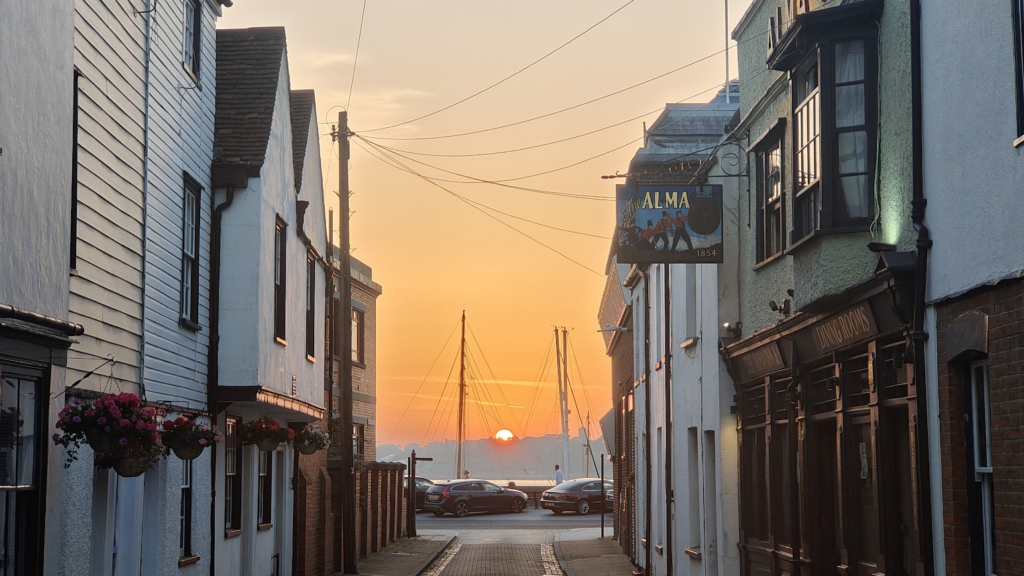
Harwich is an odd place. It sits on the south side of a huge natural harbour, across from the modern container port of Felixstowe, with its rows of crane derricks. There is a regular car ferry that runs to Holland from a little further inland, but the old town was where I finished my ride. It had a feel of history and was a generally interesting and attractive place, but it also felt rather overlooked. It is literally the end of the road, and its streets are quiet and a little decaying. In a different part of the country you might expect a place like this, with narrow roads and interesting buildings that span the centuries, to be thronging with visitors; but not Harwich. The small number of us that made it our temporary home tonight, however, we’re treated to the most magnificent sunset over the harbour.