I had to be at home by tomorrow evening; but there was still time for another glorious day of cycling before then, and I was keen to get as far as possible along the south coast. I had an offer of accommodation near Poole, and that made sense as a next step. For one thing it has a train station with direct links to London. Perfect.
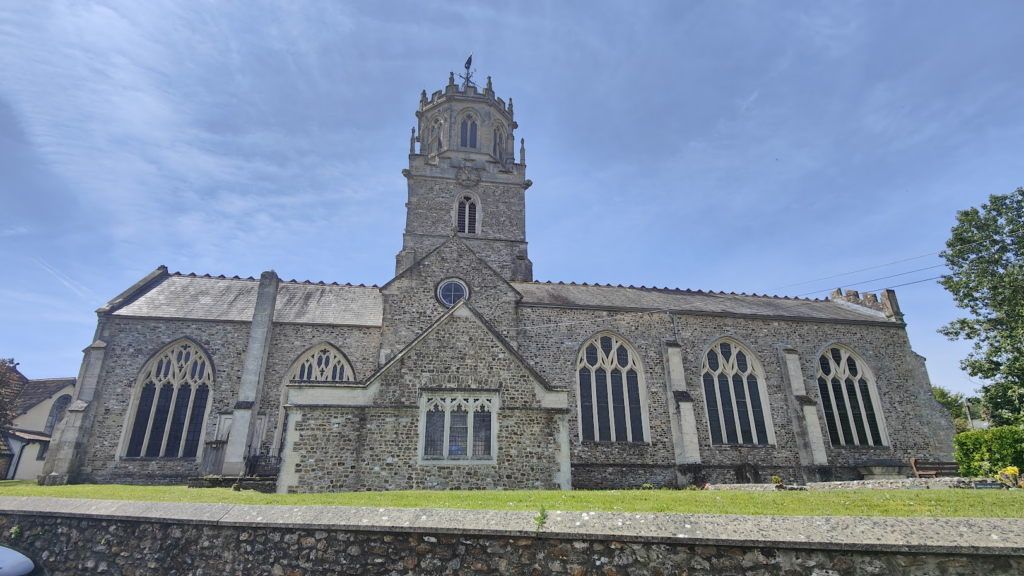
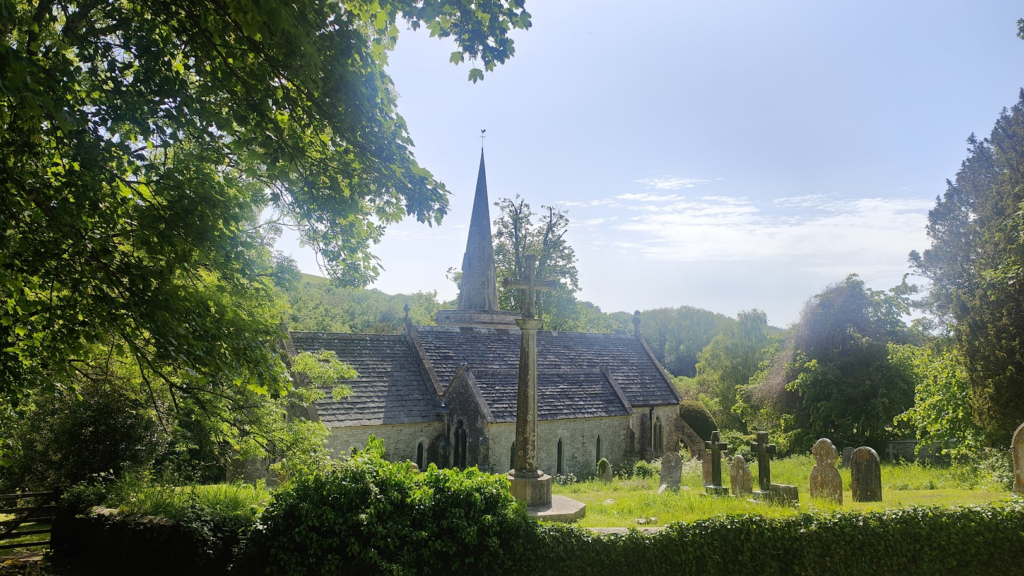
My day began with a sumptuous breakfast cooked by my Italian host in Colyton. I felt already that I would be back here. One of the many joys of these cycling adventures is discovering places and people you didn’t know existed, and knowing they are here to return to – with company – whenever you get the chance. Replete and packed up, I had a brief fuddle around Colyton before I left. It really is a delightful place. There are no main roads – or even B roads – running through it. How many towns can you say that about? The church is a splendid and unusual Norman building and there is a small square with a selection of interesting and useful shops and inns. Altogether likeable, and – I imagine – highly livable. There is a steady trickle of visitors brought in from the coast at Seaton along the 3 mile heritage Seaton Tramway, which runs through two wetland nature reserves along the scenic Axe Valley. Their website describes Colyton as “a little piece of 1950’s England set amongst stunning Devon countryside” and “one of Devon’s hidden jewels”. I would agree.
Wikipedia provides one other noteworthy gem of Colyton information: “In 2018 the town made international news following an anonymous letter of complaint about a resident airing her laundry outside. The letter, claiming to be written “on behalf of local business”, inspired other residents and businesses to hang underwear outside properties in the town in solidarity with the letter’s recipient. In 2019 townsfolk held the first annual “Raising of the Pants” festival to commemorate the controversy.” That’s a good story. Well done Colyton for your response.
Like it as I do, I couldn’t stay there all morning, even if my tired body was suggesting otherwise. I started out today feeling the previous days’ exertions more heavily than I could remember. Those hills had left a serious reminder on my leg muscles. And on my undercarriage, which for the first time this trip was beginning to feel tender! Nevertheless – time to ride.
My first stop, six miles away was the slightly larger town of Axminster, still just in Devon. For comparison, it is large enough to have a proper Tesco, if that helps. It gave its name to Axminster carpets, which pleasingly are still made here by Axminster Carpets Ltd, a business dating back to 1755 (as well as many other places around the world). The town’s centre-piece is the impressive cruciform Minster church after which it takes its name. I poked my nose inside and found it worth five minutes of my time, principally because of the mediaeval frescos on the walls above the main archway, under the tower at the central crossing. It’s often worth a look in these ancient places as you pass through. There can be surprises to discover.
From here onwards began an unavoidable first big climb of the day out of the Axe valley. Suburban Lyme Road was quiet enough. It climbed away from town at a sympathetic gradient for a mile and a half until it reached the horribly busy A30, which I had already crossed with difficulty once today. But fortunately, just in time, a small left turning near the top of the hill kept things quiet. It had me following tea-pot signs a couple more miles along a country lane that followed a high ridge, until I arrived at Teas and Creams, an unmissable rural refreshment opportunity. Well, I had now completed fully 8 miles and 750 ft of ascent on a warm day. What did you expect?
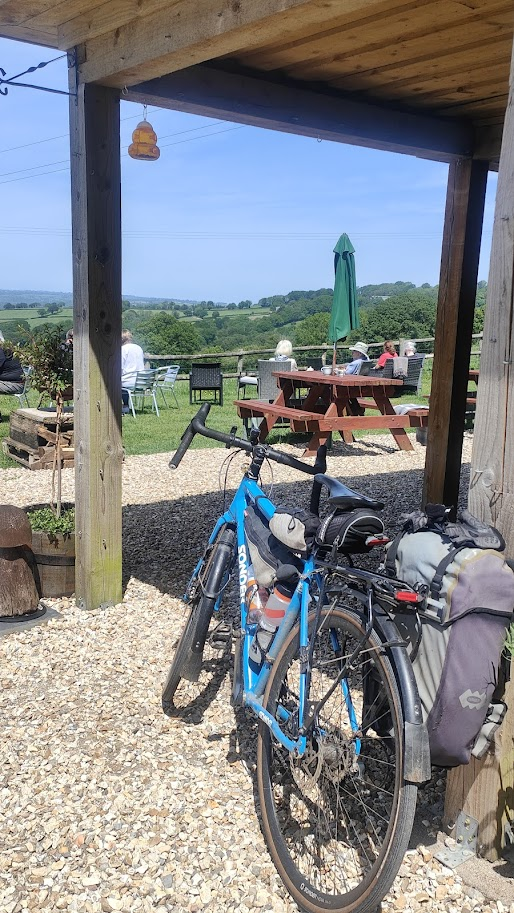
The fact is you never know when the next chance is going to come along, and I was heading into a particularly rural section of Dorset. It sounds daft; but “never pass an open café” has saved me more than once in the past. Besides, here was a chance to consume rhubarb ice cream and drink Earl Grey tea in the sunshine with a view down over glorious countryside. So I was quite pleased with myself, and I still had a lot of day ahead of me.
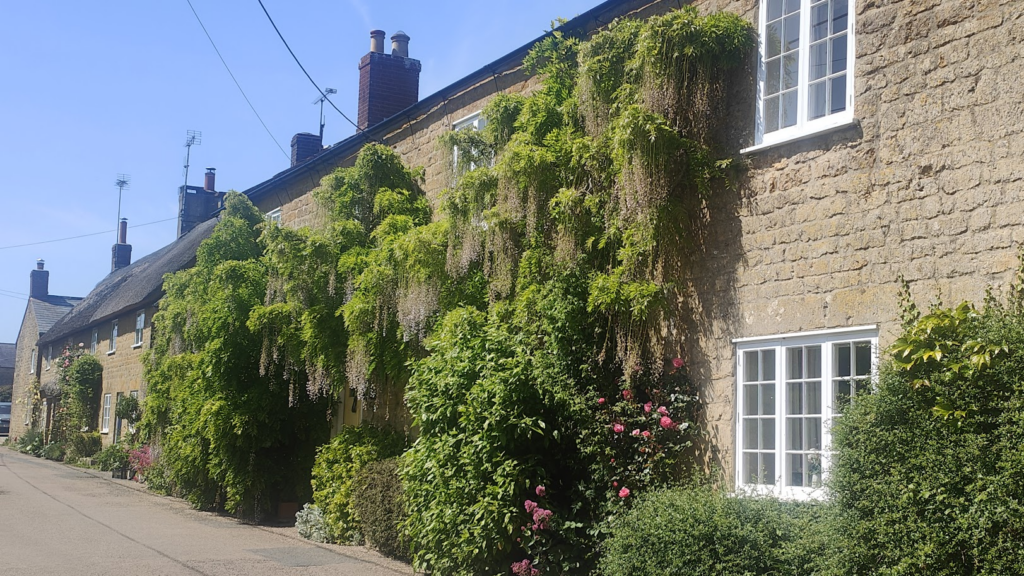
The next few hours turned into a truly lovely afternoon of cycling. I followed national cycle route 2 signs most of the way. It wasn’t my plan to do this; but obviously my idea of the best route from here to Dorchester, from what the map was showing me, was very similar to other like-minded folk. Either way, the leafy, green lanes were mostly free from traffic (except for a few gigantic tractors) and a cyclist’s paradise on a day like this.
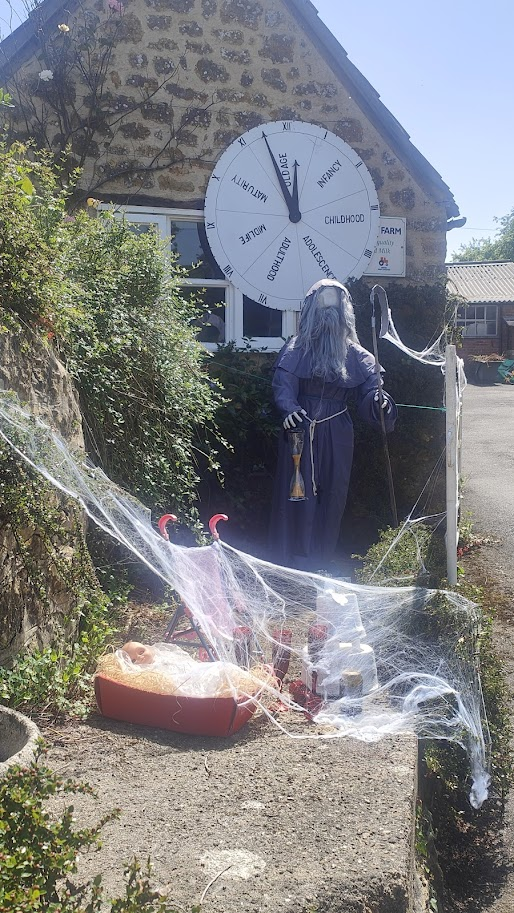
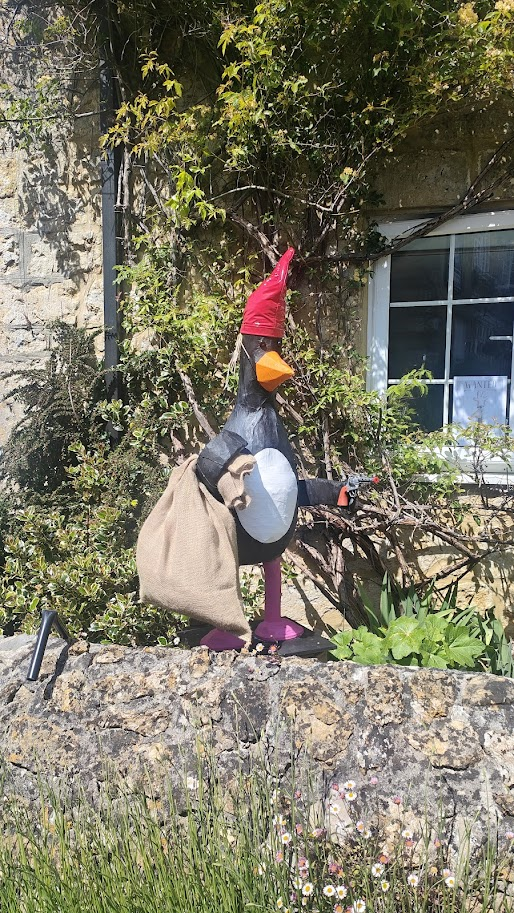
There were periodic villages of chocolate-box quaintness – one with a pretty high quality scarecrow festival – and a few tempting pubs; but the only place I chose to stop could only offer me a welcome thirst-quenching pint of lime and soda. It was an odd place – on the face of it a farm, but with old military hardware on display outside as art. In a large barn was a bar with girls dressed for the tropics standing behind it, and arranged around the sides were multi-level hay bales, and sun loungers with a range of people laid out with cocktails, as they might in the Caribbean. Except this was a farm in Dorset. They had music playing at an acceptable volume through a sound system, and DJ decks for later. Separately, further back among the other farm buildings was a marquee with transparent walls that was full of impressively tall plants, among which were restaurant tables and chairs. It looked quite fancy. Where was I?
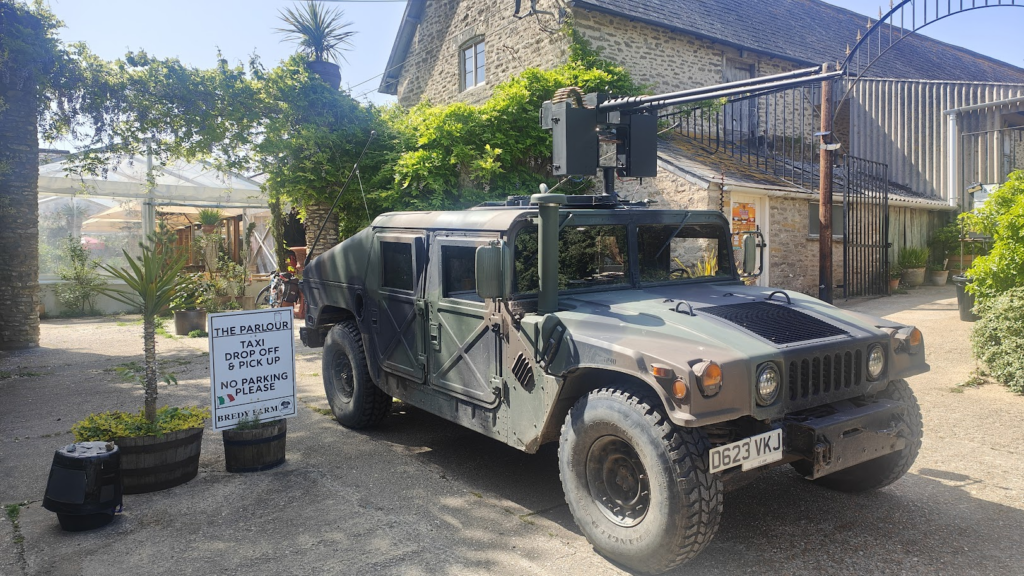
I believe the answer to that is “The Parlour” restaurant at Bredy Farm, which is just a little inland from the Jurassic Coast and the village of Burton Bradstock. It turns out that I had called in on the first afternoon of a 3 day Music Festival called Bredy Rewired, and there were large numbers of people camping in the fields opposite. They have three music festivals here every summer and live music most weekends, when – according to their website – it gets lively! It is a strictly 18+ camping venue. Who knew? Anyway, they had no food to offer me at this time in the afternoon, so I pushed onwards through rural Dorset.
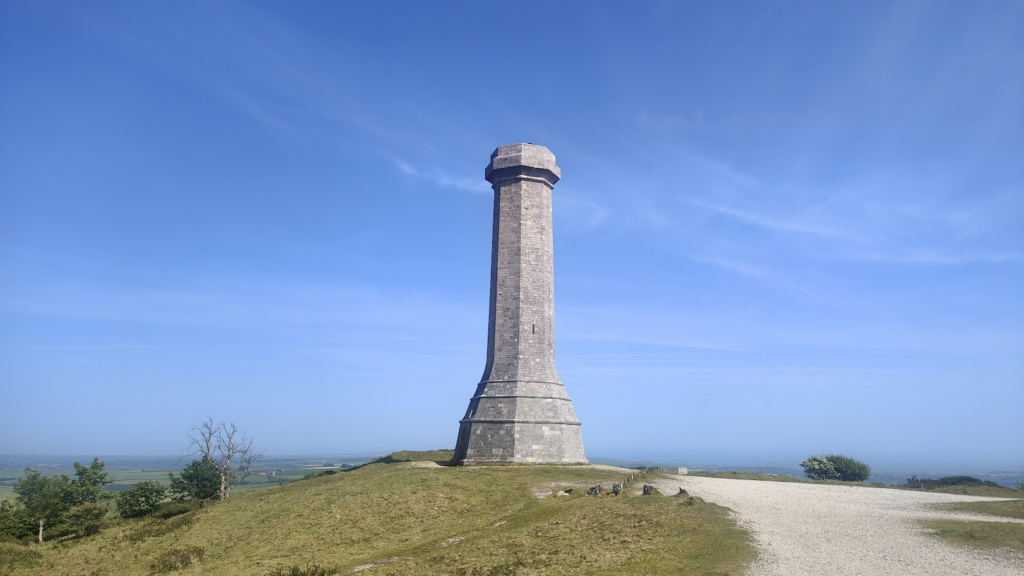
The country continued to be most fetching and I now climbed up onto a more exposed ridge called Black Down to find myself staring at the Hardy Monument, a 72 foot high chimney-like structure with eight sides. It was built in 1844 by public subscription to resemble the spyglass that Vice Admiral Sir Thomas Hardy, flag captain of Lord Admiral Nelson, used at the Battle of Trafalgar. Its eight corners align with the points of the compass and it is a landmark for shipping, visible from at least 9 miles out to sea. The view from up here, 780 feet above sea level, was sweeping, with views all the way along the coast towards where I was yesterday in Sidmouth, as well as in the other direction along Chesil Beach to Portland Bill. It also seemed like a destination for cyclists, and I passed the time with a guy who had just ridden out himself from Poole. It was hard not to be impressed by the surroundings, nor by the tremendous descent now ahead of me as I plummeted down towards Dorchester.
I like Dorchester. It seems like a very agreeable medium-sized county town, located a little inland of the Dorset coast, where I, too, had spent most of the day. Weymouth – a seaside resort and port – lies eight miles to the south. It is a long way in every other direction to a similar sized place. Indeed, that place might well be Poole, where I was now heading, but I still had almost thirty miles to cycle. I don’t know a great deal about Dorchester and I have rarely spent any time here; but if today’s brief experience is any measure, it deserves more attention. My main business here today was to get food, and to do so as quickly as possible. That was easily solved when I passed an open fish and chip shop with outdoor tables, and I very gratefully demolished steak and kidney pie and chips right there in a matter of minutes. That was good, because I still had plenty to do, and I never like to arrive somewhere I am being hosted later than I am expected, especially if it means delaying a meal. There was less pressure today because I wasn’t the only one travelling; but it still felt like good manners.
The parts of town I did see were attractive. I entered via Poundbury, a unique and experimental urban development by the Duchy of Cornwall. Construction began in 1993 and is expected to be complete around 2028. The Duke, for most of the time it has been under construction, was our now King Charles III, who is known for his strong views on architecture. The result is impressively different to most other modern housing you are used to seeing on the edge of British towns. It has, perhaps unsurprisingly, drawn both praise and criticism (such as “fake, heartless, authoritarian and grimly cute”). According to Simon Jenkins, “Many architects felt Poundbury was a comment on their failings – as it was – and deploring it became a badge of honour”. It is now more than twenty years old and has been praised for its human scale and as “a modest attempt to get things right by following patterns and examples laid down by tradition”. The Guardian wrote, “Poundbury, the Prince of Wales’s traditionalist village in Dorset, has long been mocked as a feudal Disneyland. But a growing and diverse community suggests it’s getting a lot of things right.” It argued that its main success was achieving genuine mixed-use development.
Much more has been said about its success or otherwise. Personally I quite liked it. I didn’t have time for a full critique; but the buildings and squares, mostly of red brick construction, and the parks, had personality – and variety of appearance and use – that appeared to be rooted in traditional architectural styles, and not out of keeping with its location. There are statues and obelisks, pubs and bistros, and even a fire station. More than 4,000 people now call it home. You could do a lot worse – and many have. Full marks for effort, at least.
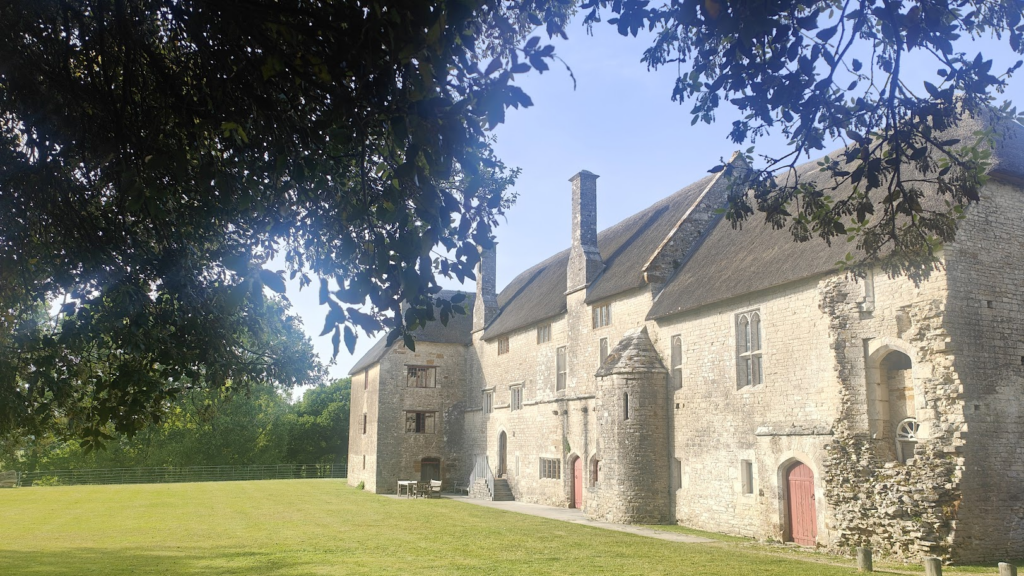
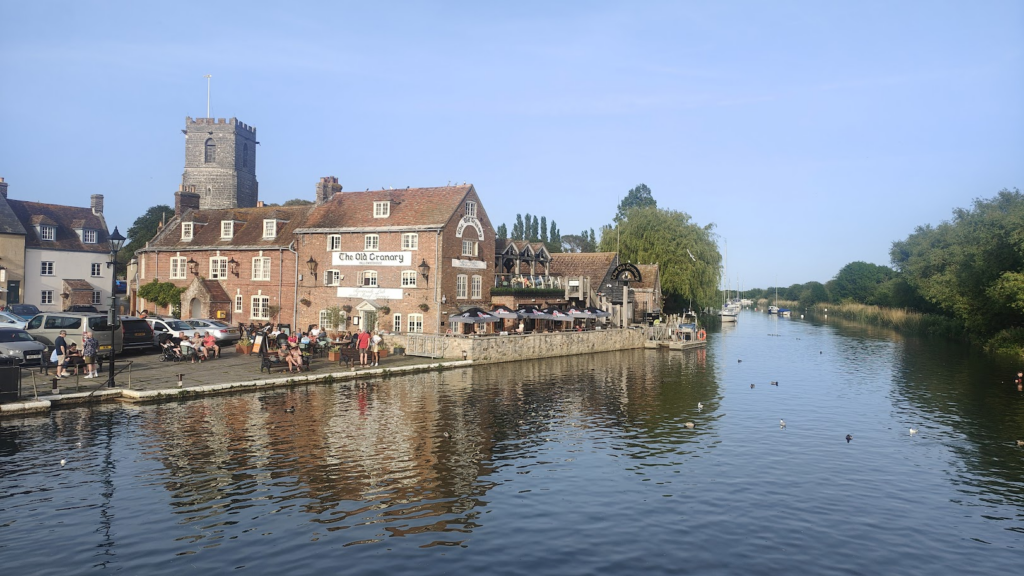
Beyond Dorchester, the hills ended for the first time since Penzance, and the cycling all the way to Poole was flat. I continued to follow national cycle route signs and they did me proud. The lanes were quiet and pretty, and took me past quietly interesting places, without fuss, all the way to the small and ancient town of Wareham, which sits near the western corner of Poole Harbour. My route entered town from the south over an old stone bridge across the River Frome, which is popular for boating. There are riverside pubs here and grassy riverbanks, and this evening in the warm sunshine it was thronged with people enjoying the weather. A few were even swimming in the water and jumping in from the bridge, It was a lovely – if rather crowded – scene.
The rest of Wareham town centre was a procession of old and attractive buildings; but there the quaintness ended. Arriving from the west in Wareham, all traffic has two main choices: south-east below Poole Harbour into the Isle of Purbeck, for places like Corfe Castle and Swanage, or north-east above the harbour towards Poole and Bournemouth, which is quite a large conurbation. My route lay to the north-east, and turned into a ride alongside straight main roads in areas with many more cars and people and development. I was back among the masses. The area felt quite heathy and the roads were attractively lined with purple flowering rhododendrons. There was a continuous cycle path along at least one side, so I won’t grumble. But it was time to get the day’s riding over with as quickly as I could. Which is exactly what I did, despite a final section of off-roading across proper heathland, thrown in by Google Maps for a little late excitement. All very pretty – not so easy to navigate. But it marked the end of a full working day, and an enjoyable one at that. I was almost 300 miles of cycling into my ride from Penzance, and it was time to break the journey for the first time to honour commitments at home. It was a good start, and I would be back, as soon as the weather offered me a decent run of good cycling days to take me ever eastward, through London and onward to Lowestoft. And who can resist that?