I had a big day ahead of me, during which I would be traversing most of the south coast of Cornwall. That meant more hills – lots of them. There was also a frisson of excitement because – to get across the natural barriers of wide river estuaries – my day would include no fewer than three ferries! I like a ferry; but rarely does a single day offer the opportunity to ride so many. On the down side, it meant I had some deadlines to meet.
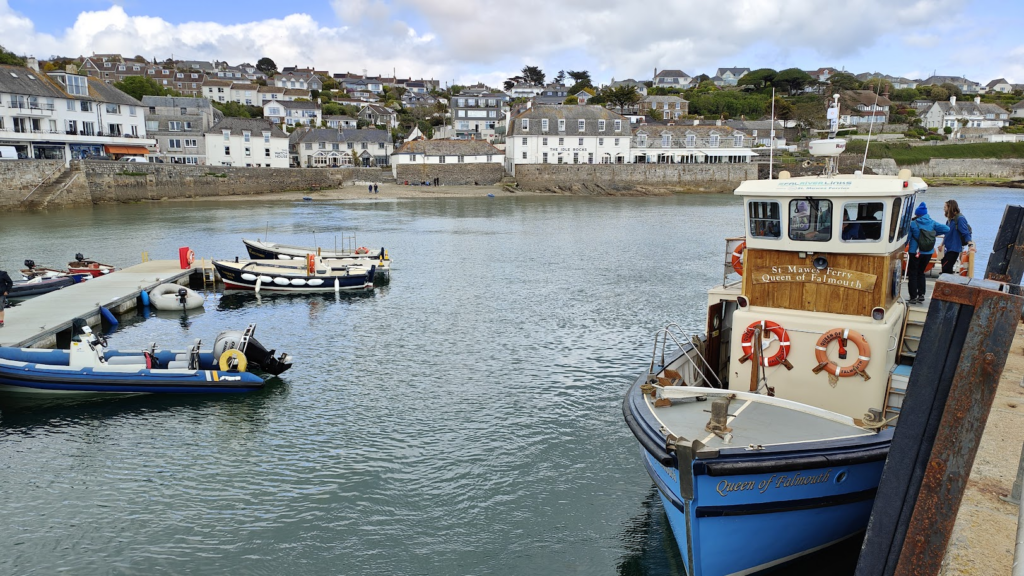
I would be starting out today by taking a ferry out of Falmouth itself, over to pretty St Mawes, across the broad River Fal estuary at the bottom of the Roseland peninsula. Yesterday, these fairly substantial passenger boats were not running, due to the high winds. But this morning they were back in service, which meant – as crew member Martha explained to me on our very quiet departure from Falmouth pier – they would run all day, because you can’t take people across from one side to the other and then cancel and leave them stranded.
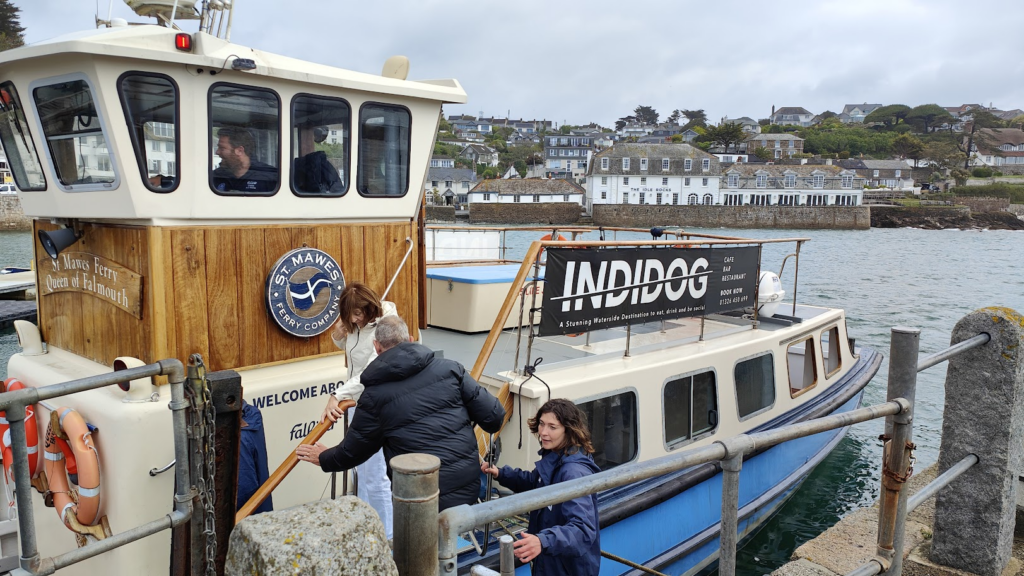
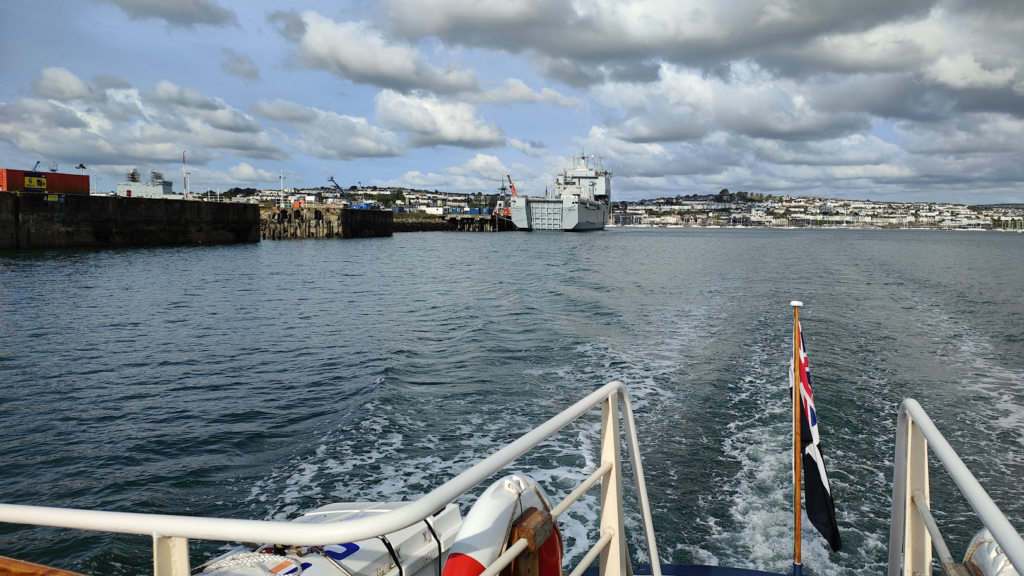
Falmouth is a nice mixture of sailing marinas and big, serious looking boats. There are dry docks where both military vessels and billionaires’ super yachts are serviced, and the place has a busy sense of importance. The town centre is a colourful place, with its long, narrow pedestrianized high street decked out in bunting. On the pier, a group from the University of Falmouth School of Film and Television were setting up to make a documentary. The Pier Master, a very likeable an friendly fellow, was keeping everyone informed and in line. He was a cyclist and showed much interest in helping me and my bike as we boarded down the tricky steps to the boat. He then reminded Martha about how she had fallen in the water not long ago during the course of her job on the ferry. It made for a jovial start to the day.
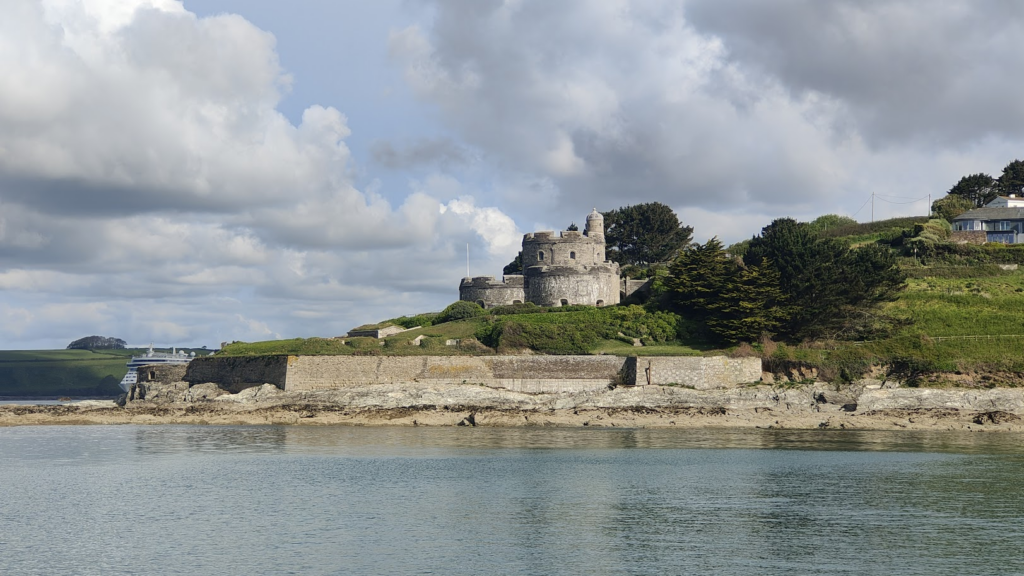
You can’t fail to be impressed by the scenic crossing of Carrick Roads – as this stretch of water is known – over to St Mawes. It is protected at either side by a castle: the much larger Pendennis Castle (where my host Kevin works) sits on the headland above Falmouth guarding the entrance to the harbour, while its smaller sibling looks out across the yacht-studded approach to St Mawes, which couldn’t be much prettier if it tried. I drank it all in, knowing that the hard work would have to begin shortly.
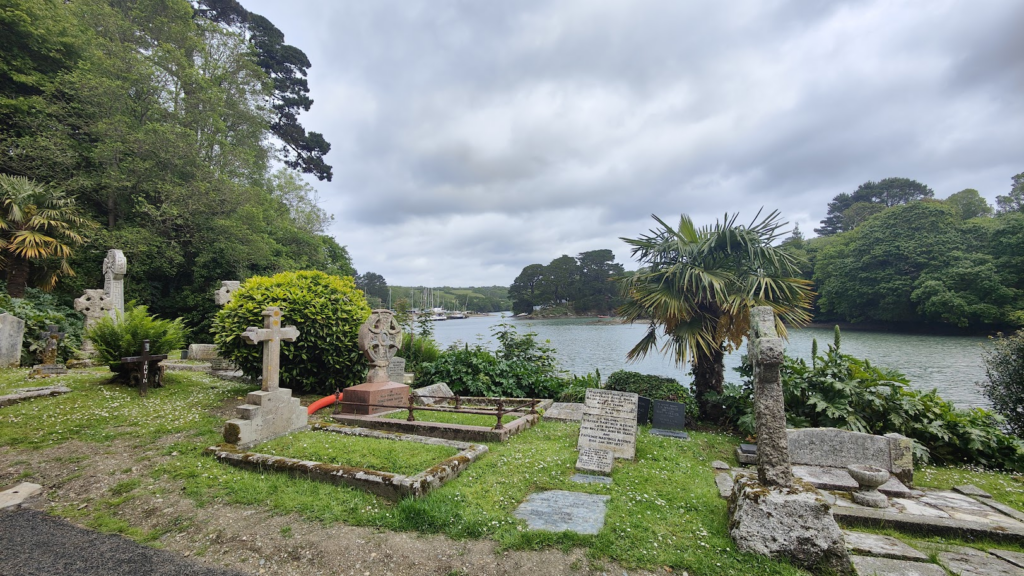
There is no easy way out of St Mawes by land. It is uphill for a considerable distance. But it got the blood flowing and set the tone for a day of many climbs. The next place up the road is St Just in Roseland. I had been told not to miss the beautiful churchyard here, so I followed the sign pointing left from the main village and immediately plunged down a steep hill back to the level of the water, next to which stands a small stone church in a secluded bay, surrounded by sub-tropical gardens. There is a tea room opposite, so it clearly attracts visitors, and you can see why. The parents of a friend of mine, Nick, are buried here and I easily found their gravestone. It is a very peaceful and beautiful spot to be laid to rest. I was glad I had taken the troubled to see it; notwithstanding the steep climb back to the main road which now faced me, and the time it all took. Now some proper progress was needed!
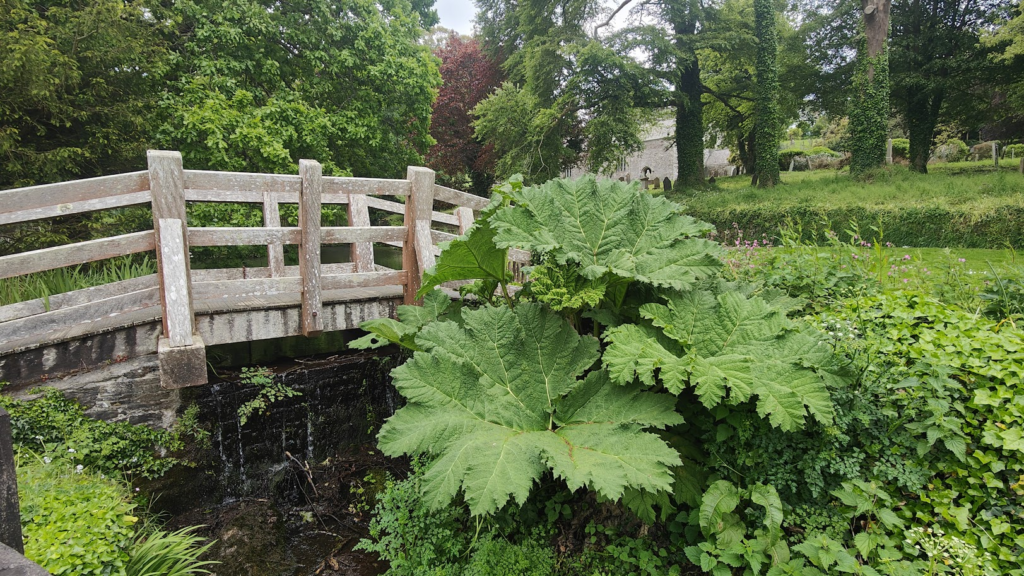
I managed to get some miles under my belt and, as soon as it made sense, took to the high-hedged lanes and left the main road to St Mawes behind. There were more unavoidable steep hills; but I wasn’t holding anyone up. I reluctantly passed a quaint old mill selling teas; but failed to overcome my instincts at the second asking in the lovely village of Veryan, where a pop up café was raising money for local charity in the village hall. This only happens once a week, so it was clearly meant to be. Besides, it was past time for elevenses. The place was full of retired folk enjoying the moment and they were pleased to see a passing cyclist. They operated on donations only, which underlines the need always to carry some cash. I was encouraged to have as many jam tarts as I wanted and I took my tea out to enjoy across the road in a small garden next to the impressive church, where a stream cascaded out of a pond and under a little footbridge. It was quite lovely.
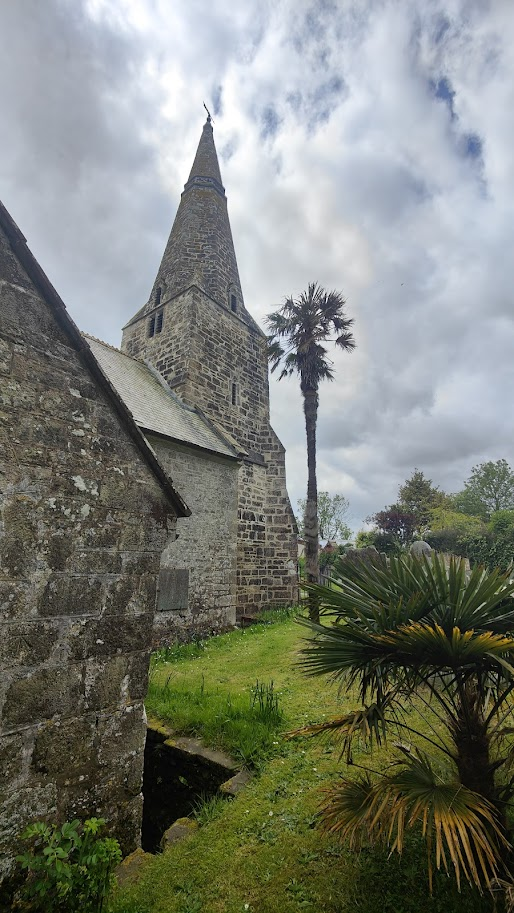
After returning my mug – and taking just one more jam tart under protest – I continued along the web of tiny Cornish lanes, up and down more hills, using my sense of direction as much as the map to guess at the best choice at each junction. In this uncertain but enjoyable manner, I successfully arrived at the diminutive and quaint hilltop village of St Ewe, which was concentrated around its central pub and ancient church. The churchyard contained large plants that would be considered exotic anywhere else in Britain; but here were fairly commonplace. It felt like it was worth poking my nose around, and indeed contained a rather moving art installation about the “Lost Gardeners” who once worked at the nearby – and now famous – “Lost Gardens of Heligan”, which hadn’t been either lost, or rediscovered, in the early twentieth century. These were people who gave their lives in the First World War. For a community as small as this, it gave a humbling reminder of the scale of the sacrifices made.
On another day I might have wanted to see these gardens; but I had already been fortunate to view two very similar gardens near Helford on our way to the Scilly Isles. Our host, Jon, was once the assistant head gardener at one of these, Glendurgan, and could tell us more than most about it. They are rather special places: abundant hidden valleys with streams and pools, full of all manner of sub-tropical plant species, leading downhill to small, private beaches on the Helford River. So I was happy enough to keep pedalling today, knowing that lunch wasn’t too far ahead.
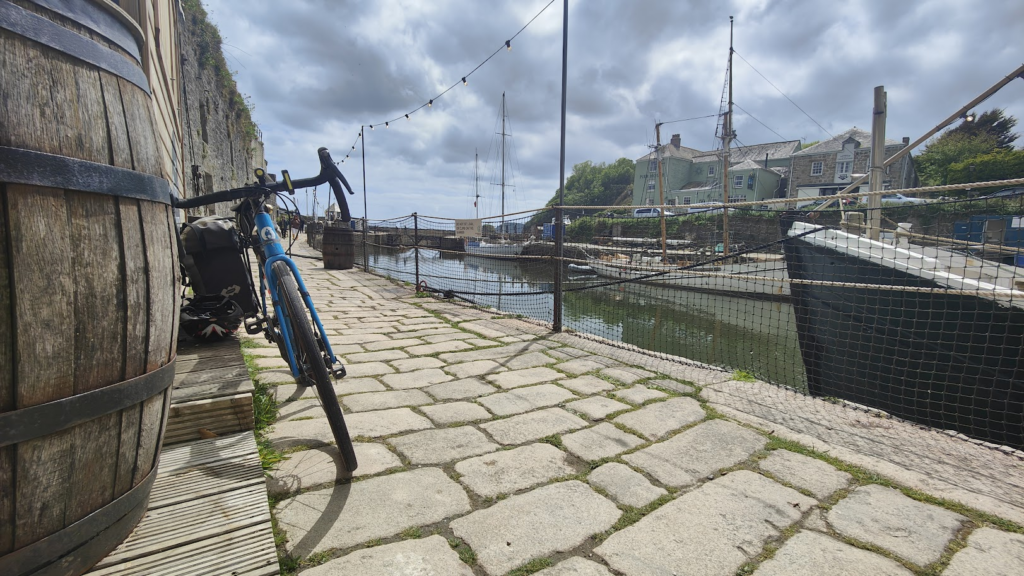
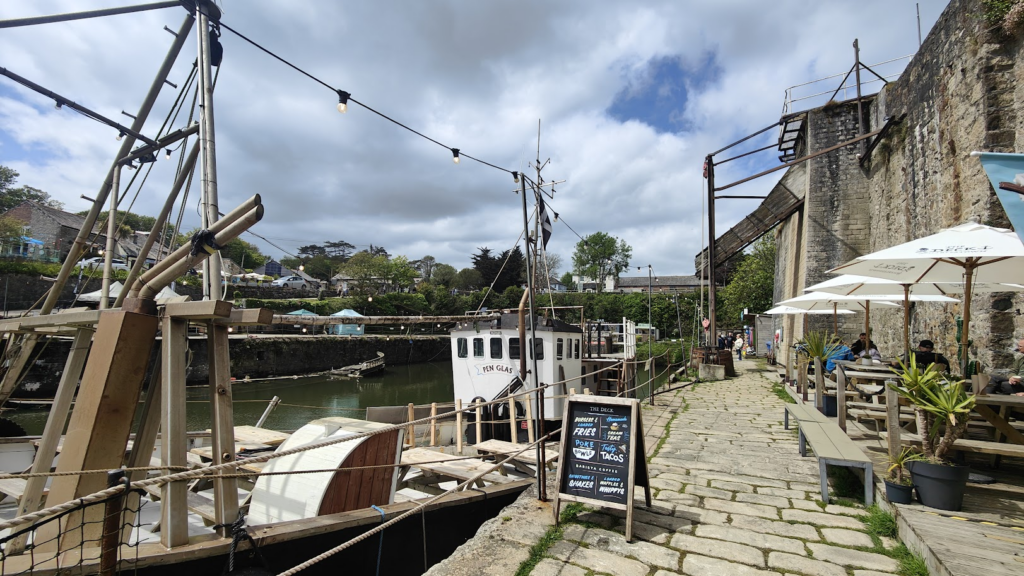
A few miles further on, on the coast below St Austell, lies the wonderful old Charlestown Harbour, a World Heritage Site and location of tall ships and a plentiful supply of pubs and cafes. This feels like somewhere frozen in time, and you may have seen it as a location in the BBC’s Poldark series. A huge sea lock leads into a long, protected, rectangular man-made haven for large boats, which can moor alongside high vertical walls. You can walk right around or view it from above, and I don’t know anywhere else quite like it. It was an obvious place to stop. So I did, without hesitation, after a rewarding morning’s work. I knew the lion’s share of the day still lay ahead of me; but this wasn’t to be missed.
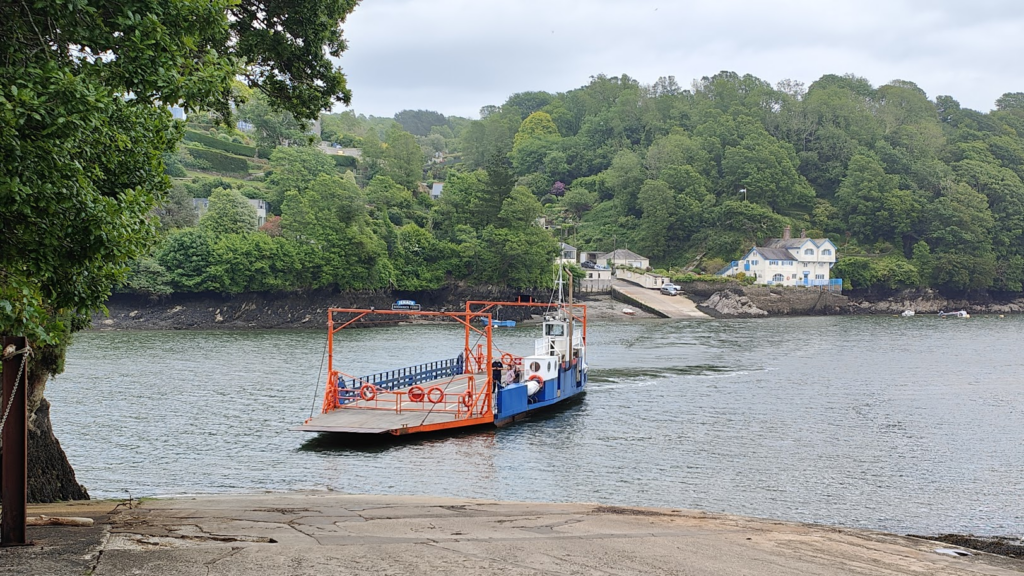
And I was right. The next section after the China Clay docks at Par was a tough climb up and over to the small river port of Fowey, where – with Jenni for company – I triumphantly ended the crossing of my 204th and final OS Landranger map in 2022, in the dusk of a late November day. Today, I headed straight for the vehicle ferry that plies back and forth to Bodinnick, where Daphne du Maurier lived and wrote her novels between the wars. Records of a ferry here go back to 1344; and as late as the 1920’s the ferry was still rowed across. Since the 1990’s the current service has a capacity of 15 cars and 100 passengers, although today it was much less than that as I crossed in a resplendent orange and blue boat. It is all over in a few minutes, and then I faced an almighty climb up the steep slipway and away past the cottages of Bodinnick. I had one chance to get some momentum, riding right off the ferry itself (which is usually discouraged). But I made it. Just.
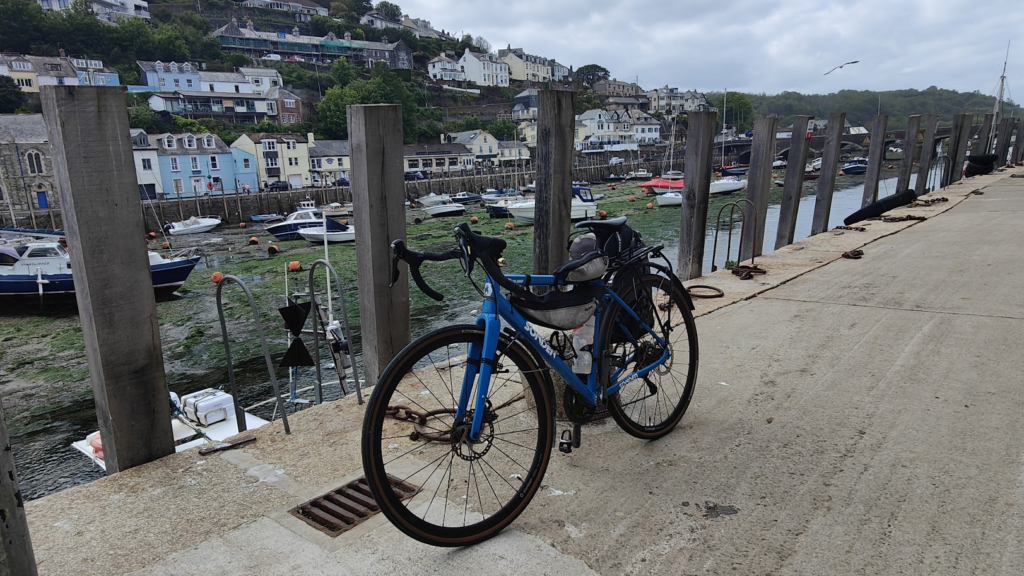
The next hour was spent on undulating B-roads that took me across upland downs – and then steeply downhill – into the riverside port of Looe. This seemed like quite an important place for the landing of seafood and there were places you could eat fresh catch right by the quay. Although there is a beach here, the town was arranged along the river, which was more mud than water in the current state of low tide, with many small boats scattered helplessly aground between the two banks. With some effort, I found a café still open among Looe’s charming pedestrianized narrow streets. I rested and fuelled up for the last time on coffee and a delicious pistachio croissant, ahead of my assault on Plymouth. I still had a ferry to catch, and the final section along the cliffs would, I knew, be challenging.
And so it proved. It was a breathtaking section of clifftop road, with some incredible properties looking out to sea from Downderry. Once I got a few miles from Looe, I pretty much had it all to myself. But, once again, the hills were punishing. I was aiming for a ferry that crosses the Tamar over to Plymouth from Cremyll harbour, by the estate of Mount Edgcumbe house and country park on the Rame peninsula, the last bastion of Cornwall. These boats are run by Plymouth Boat Trips, who operate several routes from the city. I was hopeful of catching the 7pm boat; but I also really wanted to make a short (but very hilly) nostalgic detour into the seaside village of Kingsand, where I had a holiday in May 2005 with my (then) 4 year old twins in a tiny cottage called “Kiddlywinks”. I was only a mile away, so I had to do it, hills or not.
The old fashioned main street of the village was far steeper and narrower than I remembered from more than twenty years ago; but it was all still here, including the beach where we played and built sandcastles under the watch of the village clocktower. It received a fearful battering some years later in an Atlantic storm; but all seemed well this evening. And from here it was steeply back up and then steeply back down again to meet the boat, which was waiting for passengers at the bottom of an exciting long descent. And suddenly before me, perhaps just half a mile or so away across a narrow point of the broad Tamar estuary, was a big city: Plymouth.
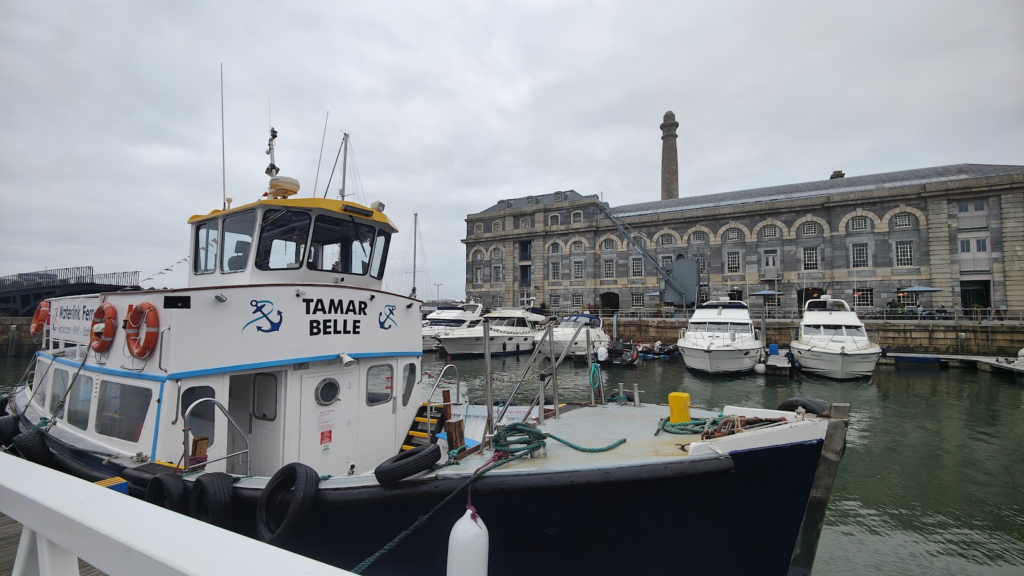
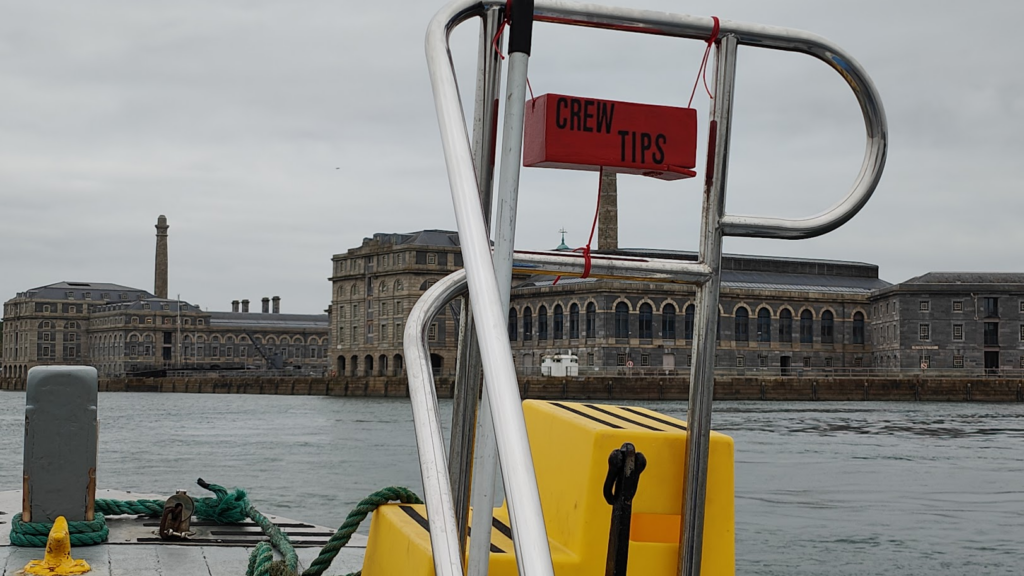
The “Pride of Edgcumbe” ferry was fun, but brief. Leaving Cornwall behind, we made directly for some fine old stone-faced Georgian waterfront buildings and dockyards, Royal William Yard, adorned with clock towers, grand archways, statues and chimneys. It has all been renovated into a desirable collection of homes, offices and restaurants. I was very impressed. The ferry entered a large walled dock under an open swing bridge and tied up next to its sister ferry boat, “Tamar Belle”, and I disembarked into Devon.
From here it was a ten minute ride through inner city Plymouth – a mixed bag – until I emerged on the edge of the Hoe, a large waterfront park with a lighthouse that looks out over Plymouth Sound, where famously Sir Francis Drake had played bowls awaiting the Spanish Armada. And here was my overnight bed and breakfast, a minute’s walk from a waterfront Chinese restaurant in the heart of historic, maritime Plymouth. A day well spent.