I wasn’t doing things by halves on this leg of my journey: yesterday I dealt with most of Cornwall, and today I would be crossing a great deal of Devon. Both of these large counties are known among cyclists for their relentless hills. It’s not simply height, it is the fact that you rarely get any respite. If you are riding along the coast, there are incessant tall cliffs, regularly breached by rivers. Inland, you have the likes of Dartmoor and Exmoor: high, rolling open moorland. So I was ready for an undulating day’s cycling. What I got was beyond even my own expectations. And it was exhausting. I loved it all, that said – Devon is a beautiful place. You just have to really earn it!
Part of the art of these cycling adventures is knowing how much you can reasonably take on in a day. My golden rule always applies: it has to be fun or I stop. Here, I was taking advantage of an obvious launch pad – our trip to the Isles of Scilly – and I had at least given myself a reasonably kind amount to achieve on the first day back on the mainland. I measured Penzance to Falmouth as about 50 miles and 3,000 ft of ascent. It was fairly comfortable, even given my relative lack of preparation. Falmouth to Plymouth was a lot tougher: 65 miles and over 6,000 ft of ascent (and it is the hills that really get you). But today’s ride eclipsed that: 80 miles and over 7,000 ft of ascent is serious business on a loaded bike. In my state of partial cycle-fitness, it almost got the better of me. The big thing I knew I had on my side was daylight, and as it turned out, I used up most of what was available!
Like yesterday, there were ferries – and like yesterday that meant deadlines hanging over me for much of the day. The first ferry crossing was directly from the Barbican waterfront in Plymouth, five minutes from my bnb, launching me straight into green countryside across Plymouth Sound. Far beyond here, however, I had to be sure I didn’t miss the last ferry of the day across the River Exe estuary, over to the town of Exmouth from Starcross on the west side. Miss that and I had an extra 16 miles of cycling to do on main roads, taking me almost into Exeter. I didn’t want that. The last ferry left at 4.15pm and Starcross was almost 60 miles away – certainly achievable in the time I had; but far enough that it could easily go wrong. I knew I had no chance of catching the previous ferry, so there was nothing to be gained by going hell for leather. There would need to be stops and refreshments. But there were also all those nasty hills! Route choice also becomes an issue, and there is typically a trade-off to be made between tiny lanes (delightfully quiet and scenic; but extremely hilly, often confusing and slower) and busier roads (still hilly; but they get you there). Today I opted for some of both, and it worked.
The Barbican in Plymouth is just around the corner from the Hoe, and is another example of the buildings from the city’s military maritime past being wonderfully repurposed. We set sail in the small passenger ferry from a large marina full of sailing boats, nestled under high citadel-like defensive walls. There was a morning mist hanging over Plymouth Sound, but it all still looked rather fetching on an otherwise fine day – perhaps showing its best side from the water.
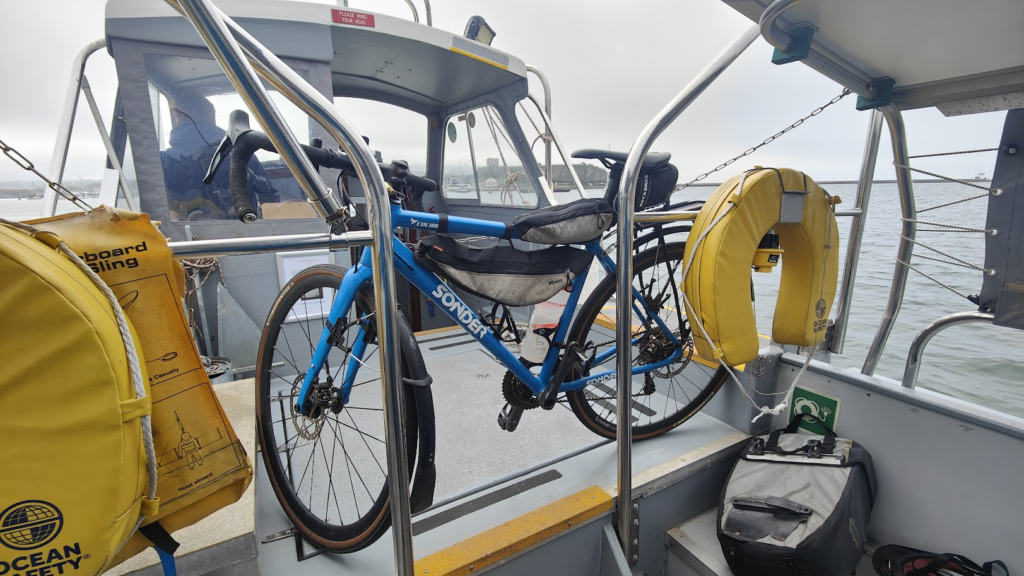
The ferry let me off at Mount Batten landing at the tip of a wooded peninsula that leads away up the coast. Like me, walkers on the SW coastal path would enter and leave Plymouth on the same Cremyll and Mount Batten ferry services, keeping to a minimum the time spent in an urban environment. There were a few walkers on the boat with me this morning; but my route initially took me away from the sea, heading east (rather than south) along small, quiet, undulating lanes to the villages of Brixton and Yealmpton, where I brushed briefly with the main road. I needed to cut across to the foothills of Dartmoor, where I was planning – for a time – to follow national cycle route 2 through the series of small towns that are today bypassed by the A38 expressway between Exeter and Plymouth. That involved more cycling along miniscule lanes, hemmed in between the highest and thickest of lush hedges, as is the way here in Devon. You can’t ever see far ahead, and one consequence of this is that you really don’t get the full benefit of any downhill stretches you may have earned from your regular climbs. There is only room for a single vehicle, and any encounter requires evasive action.
In this uncertain manner I made my way up and over more hills to the town of Ivybridge, a busy little place going about its daily business in the shadow of Dartmoor. There wasn’t anything exceptional to report here; but it sports a fancy modern cinema in the town centre, which is never a bad thing, and surely says something positive about the place generally. Ivybridge was the first, and largest, in a chain of four small towns on this section of my route, all sandwiched in the narrow strip of flatter land between Dartmoor and the A38. I didn’t stop here; but it was getting towards lunchtime, so I did stop in the next little town of South Brent.
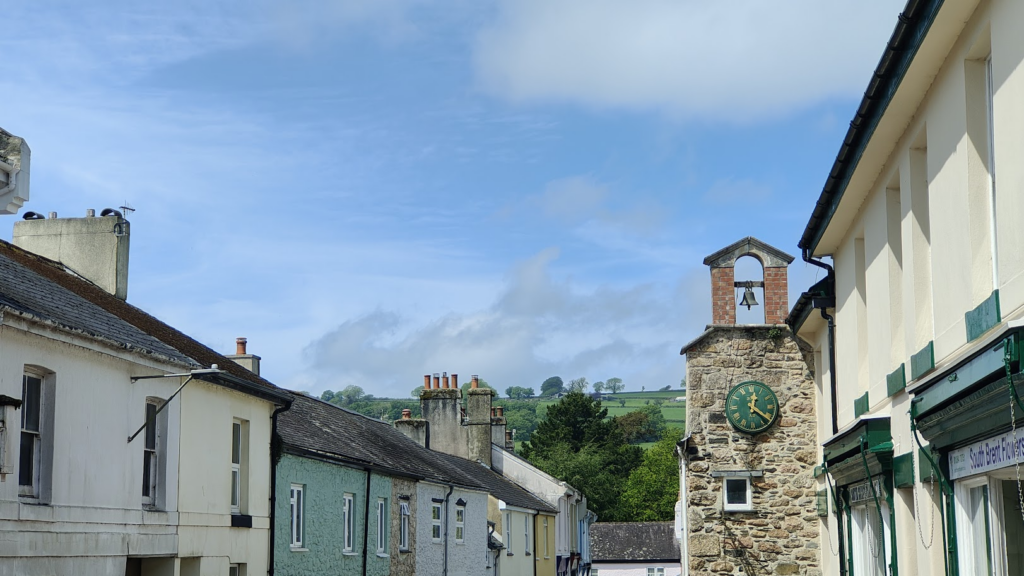
I was surprised how old these places felt, especially in their town centres, which typically consisted of narrow streets and continuous whitewashed terraces of small shops and ancient hostelries that looked little altered in recent times. They certainly weren’t built with cars in mind, and often the streets were one way only. There were some handsome churches and other civic buildings, with the odd clock tower for good measure. I liked it.
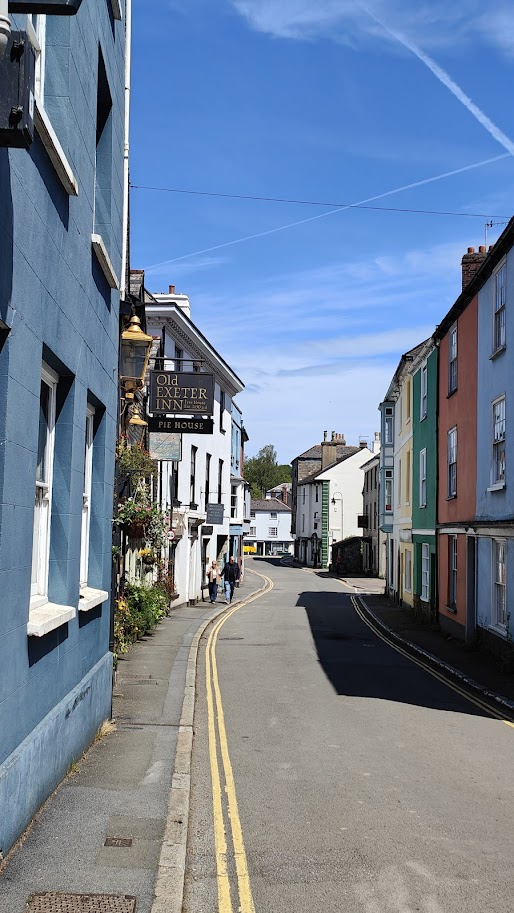
In quiet South Brent, I availed of a small delicatessen and enjoyed a gourmet scotch egg and a tea in the sunshine. But there wasn’t time to lounge, and I followed a lovely country lane that ran quietly in a straight line to the next town, Buckfastleigh, whose cheerful centre was older and narrower still, and full of character.
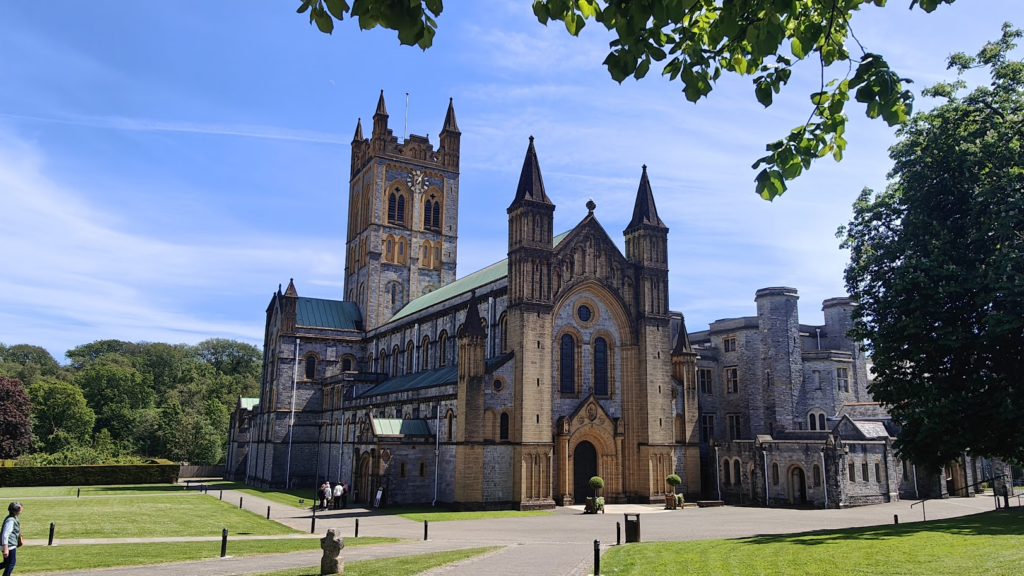
A little beyond was the turning to Buckfast Abbey, a place I have heard much abut but never quite reached. So I wasn’t going to get within a mile and not see it. I had time. And it was worth the detour. The abbey and its grounds are set in a pleasant valley. It is still a fully functioning monastery, and the main abbey church is surrounded by attractive outbuildings – including restaurants and shops – that speak of the large numbers of visitors they obviously receive. The grounds were manicured and the large cruciform church, with its tall orange-brown central tower, looked splendid as it glowed warmly in the sunshine. It was tempting to stop for a full meal, just because it was such a pleasant place to be. But I knew better. This needed to be a photo only visit today. I will return.
I could equally have chosen to buy a bottle of Buckfast Tonic Wine, which is “a medieval-style wine with tonic ingredients, made by Benedictine monks at Buckfast Abbey in Devon since 1897”, according to the abbey’s website. Made in Devon, but consumed in large quantities, bizarrely yet specifically, around far-away Glasgow! According to Wikipedia “…it has become notorious in Scotland for its association with antisocial behaviour, especially those under 18 years old.” Indeed, there is an acknowledged “Buckie Triangle” – an area east of Glasgow between Airdrie, Coatbridge and Bellshill. Wikipedia has much more to say about “Buckie”, including that “Several Scottish politicians and social activists have singled out Buckfast Tonic Wine as being particularly responsible for crime, disorder, and general social deprivation in these communities. There have been numerous calls for the drink to be banned or made more expensive to dissuade people from buying it, or sold in plastic bottles to reduce glassing incidents. A survey at a Scottish young offenders’ institution showed that of the 117 people who drank alcohol before committing their crimes, 43 per cent said they had drunk Buckfast. In another study of litter around a typical council estate in Scotland, 35 per cent of the items identified as rubbish were Buckfast bottles.
“The monks of Buckfast Abbey and their distribution partner, J. Chandler & Company, deny that their product is harmful, saying that it is responsibly and legally enjoyed by the great majority of purchasers. They point out that the areas identified with its acute misuse have been economically deprived for decades and Buckfast represents less than one per cent of total alcohol sales in Scotland. In 2016 sales of Buckfast Tonic Wine reached record yearly profits of £8.8 million. The abbey trust, which is a shareholder of the Hampshire-based wine’s distributor and seller, J. Chandler, gets a royalty fee for every bottle sold.
“A former head of the Scottish Police Federation said: ‘Buckfast, the distributors and the lawyers who act on behalf of the monks refuse, point blank, to take any responsibility for the antisocial behaviour that’s caused by the distribution and the consumption of Buckfast. They even refuse to change the glass bottles to plastic bottles.’ “
I know what I think. You decide. But back to my journey…
After one more similarly small, attractive town, Ashburton, on whose very fringes Dartmoor National Park begins, I had to find my way over to the coast and my ferry. This was no simple task. I could have followed busy, cycle-unfriendly main roads all the way – but where is the fun in that? Either way, I was consigned to making my way through Newton Abbot, a much bigger town of over 26,000 people, with big roads and traffic. So to get there, I chose the tiniest of lanes, and almost immediately wondered if I had made a grave error. The high-hedged lanes had grass growing up the middle and climbed steeply. But once you started, you felt committed to your choice, so I battled on and things gradually improved, especially around the pretty hilltop village of Denbury. It was all very peaceful, and then – suddenly – it wasn’t as Newton Abbot appeared from nowhere. It is a hilly place, and it seems to sprawl. There are flyovers and subways to confuse the passing cyclist, and I won’t be upset if I don’t find myself there again. I ended up on the south side of the River Teign estuary when I meant to be on the north. This wasn’t a disaster. In fact I believe that it was scenically and traffic-wise a master stroke in disguise. But instead I had yet more painful hill climbing (and corresponding descending) to conquer before arriving among the large houses and hotels of the attractive seaside village of Shaldon, which is linked by a long bridge to the town of Teignmouth, where the River Teign meets the sea.
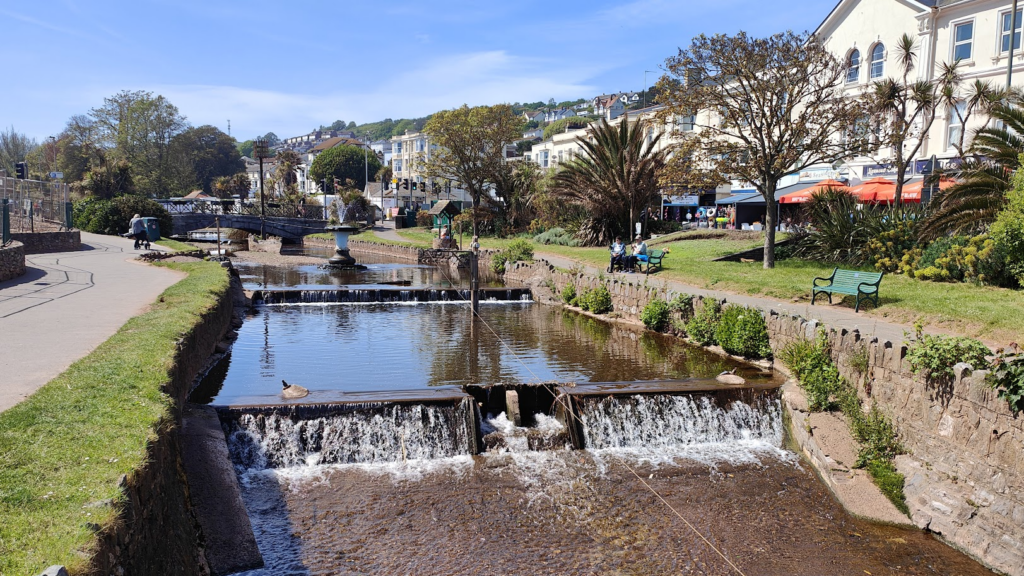
There was no time to pause and reflect on my progress, since I still had a way to go up the coast to the next estuary, that of the River Exe, where my ferry should be. I was still OK for time; but no more than OK. Between Teignmouth and Dawlish, the next resort east, are high cliffs. The railway clings to the bottom of them as it precariously and dramatically makes its way between Exeter and Plymouth. But the line is often damaged by storms and there is no room for a road, or even a cycle path. So it was another long climb, this time in traffic, and then a long, fast descent into the rather genteel centre of Dawlish, which features very pretty public garden with streams and cascades. And even then I had more climbing to do before I could finally turn into Dawlish Warren, an area of sand dunes and holiday camps, for the final few miles along a quieter road to Starcross, just inland from the open sea.
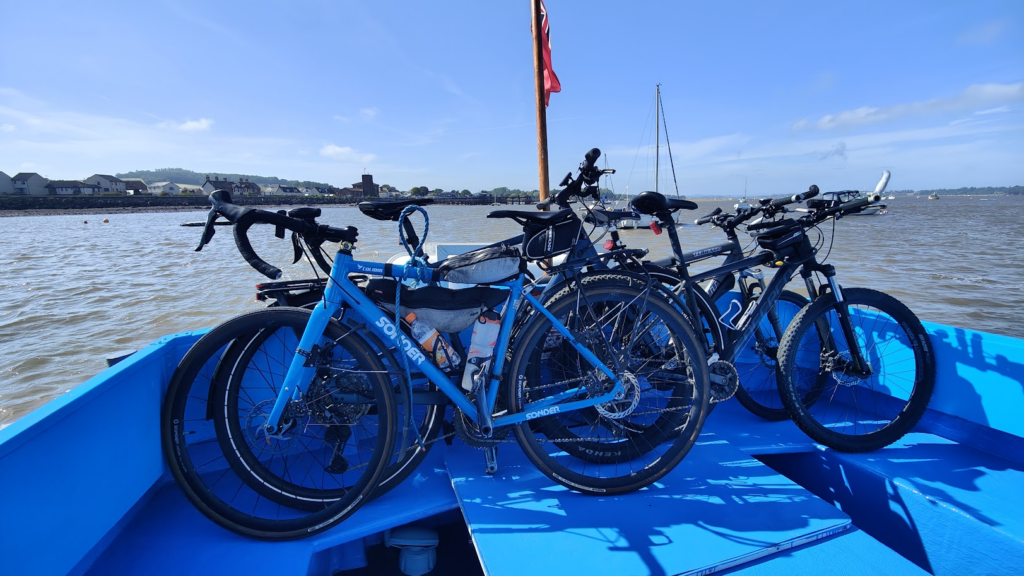
I’m glad I didn’t cut it any finer, because the only way to the pier and the ferry was up and over the metal railway bridge across the train tracks at the small station, and that took some doing with a loaded bike in cycling shoes! But I arrived with maybe ten minutes to wait for the ferry to arrive and unload, by which time three more locals had arrived on bicycles after a ride around the estuary from Exmouth. It was cash only, which almost prevented a couple of elderly Belgian walkers from crossing; but we cyclists clubbed together and paid what they didn’t have, and all was well, saving everyone an unwanted 16 mile detour!
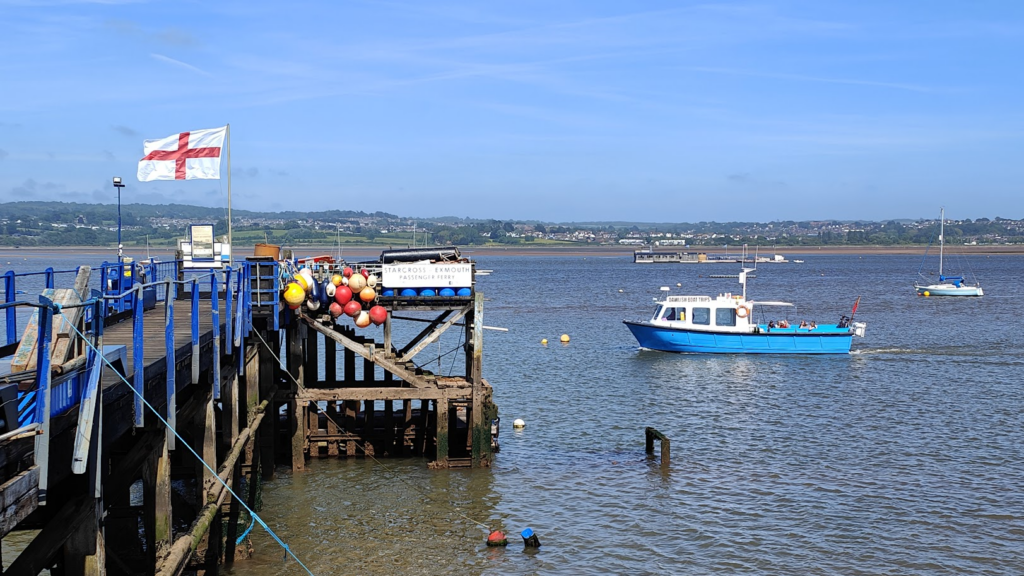
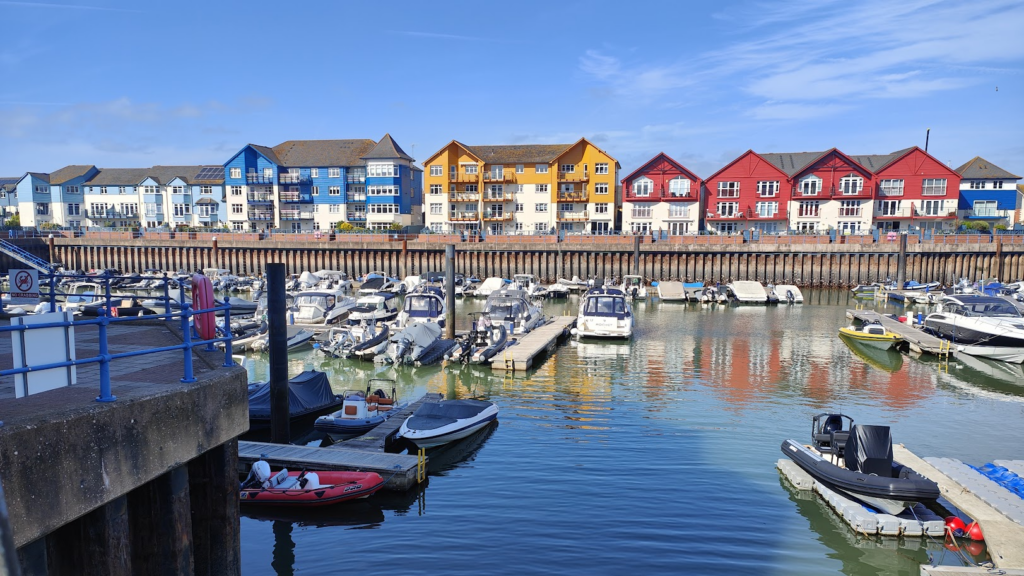
The crossing over to Exmouth marina was delightful, as we passed countless small boats tied up in the estuary. And then I allowed myself an indulgent half an hour of rest and refreshment overlooking Exmouth beach, which today was a hive of activity of young people enjoying the sun, sea and sand. I had made my deadline, it was barely 5pm, and I was now in more familiar territory, and back on quiet lanes. For the remainder of today’s ride I would be in the area where I came several times as a child on family holidays, surrounded by happy memories. I had about 21 miles to go, which I might usually expect to take me a couple of leisurely hours, given the likelihood of stops along the way. So I had plenty of time.
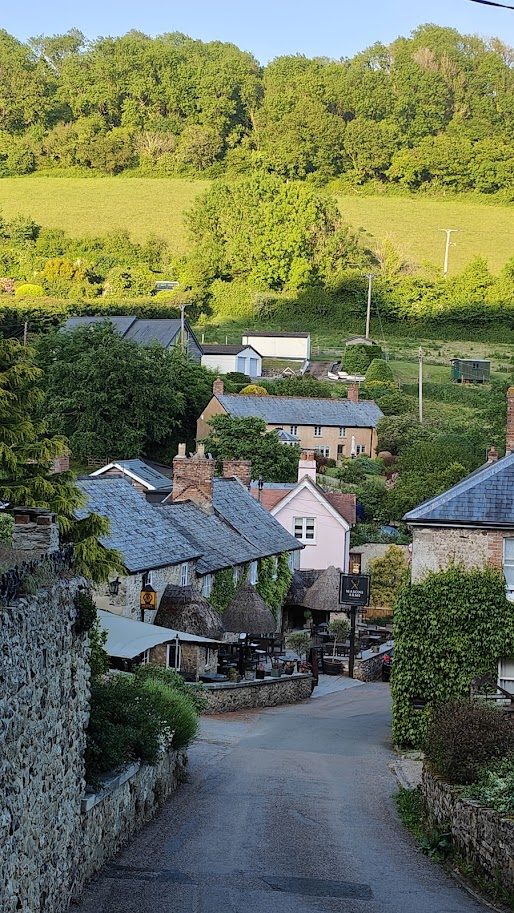
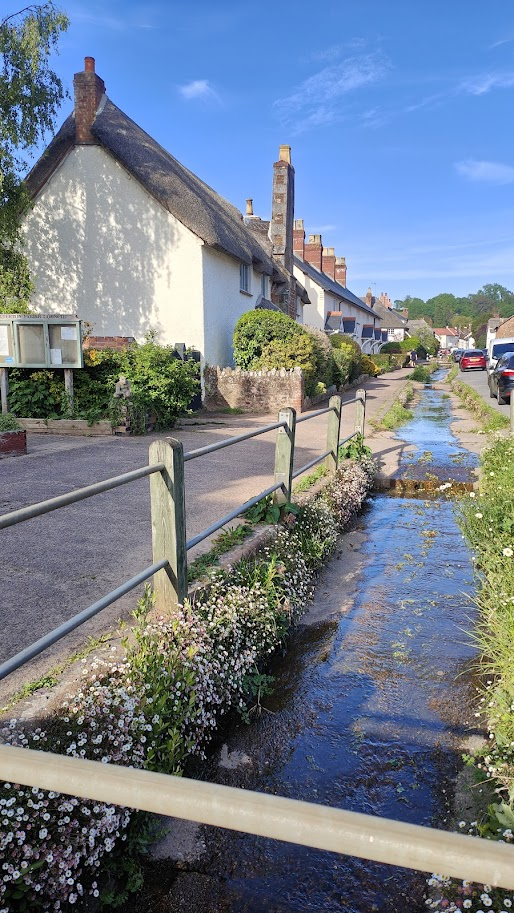
The first section was really lovely, as I climbed gently out of town and over towards the picture perfect village of Otterton, just inland from some quite high cliffs. It is a visual feast, lined with thatched houses and a stream flowing down the village street towards an old mill. It is hard to think of a more unassumingly pretty place. The lanes beyond were pleasant to cycle until the climbing took over. It was modest to begin with, but it got steeper and seemed never ending. I reached the cliff top with some gritting of teeth, to be greeted by a couple of walking cyclists coming towards me. They shouted their congratulations and wished me a fun descent, and I have to say it was quite exhilarating, all the way steeply down into the centre of Sidmouth promenade, speeding past Jacob’s Ladder beach, where I enjoyed many a happy family afternoon.
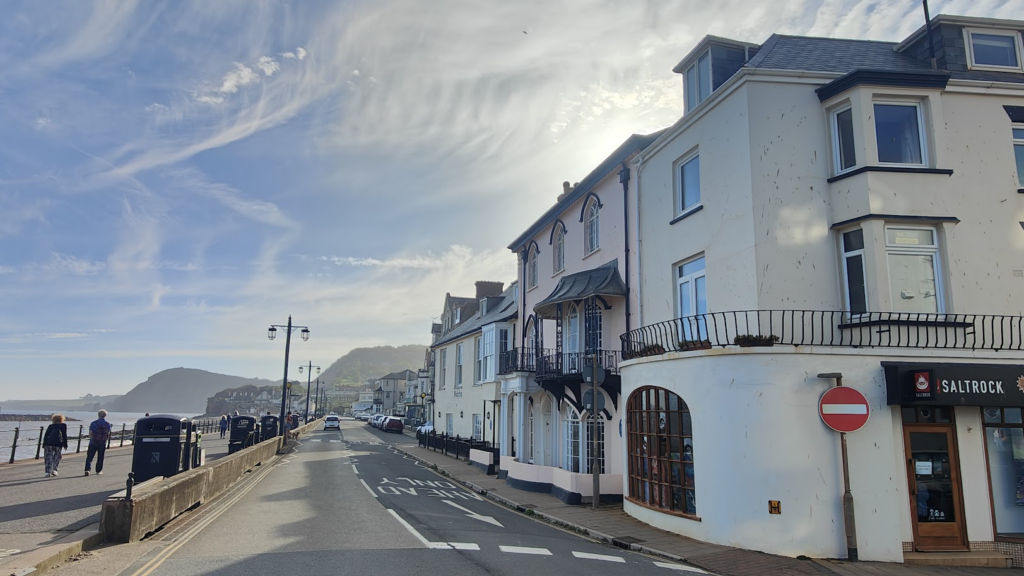
Sidmouth is a charming resort of large hotels and manicured lawns and gardens, sandwiched between high red sandstone cliffs on both sides, breached by the small River Sid. I love it here; but a little after 6pm it is not the easiest place to find food in a hurry. I had by now concluded that this was my best – perhaps only – chance of dinner. Colyton, my final destination, is a small place and I wasn’t sure what I would find there, or when I might arrive, let alone get through the shower! With so much daylight and sunshine, however, this didn’t really matter as long as I ate on the way. But after cruising the maze of pedestrianized shopping streets, all I found were closed cafes and pricey seafood restaurants overflowing with customers. I’d almost given up when I stumbled upon a sign to a temporary food truck in the quiet grounds of a Regency Mansion (now an events venue), with a sunny bench alongside. Unlikely; but perfect.
Getting out of Sidmouth can be achieved without using the main roads, and it is even signed as a national cycle route. The start is promising, through mansions arranged along a leafy lane. Then it climbs. And climbs. Steeply up through trees. And then some more. Very little defeats me. This did. I used every available driveway as temporary respite, allowing my breathing and heartrate to return to normal before launching myself back for more punishment. A cyclist out for an evening spin came whizzing past me downhill. “That will be me in fifteen minutes” he called out with a smile. But 15 minutes later I was probably still struggling near the summit of this “cycle route”, where, appropriately, there was an astronomical observatory.
But it was all worth it, because I arrived in the quiet hamlet of Salcombe Regis, dominated by its splendid mediaeval church and thatched cottages, and from there I had a run of perhaps four miles along peaceful narrow lanes to – and through – Branscombe, one of England’s longest villages. This is where we used to stay, in a large farmhouse, on our summer family holidays. And it was all very familiar. The mostly quaint, often thatched houses straggle along the lanes heading ever downwards towards the pebble beach. There are two pubs, a thatched forge and a magnificent fortified Norman church, across the road from an impossibly narrow gap between the houses that is the steep lane to the school. Beyond, up a hidden valley, lay our traditional farm accommodation. There was milk straight from the cow every morning, and clotted cream with pudding each night. The summer evenings were filled with walks along the lanes picking blackberries. Fond memories.
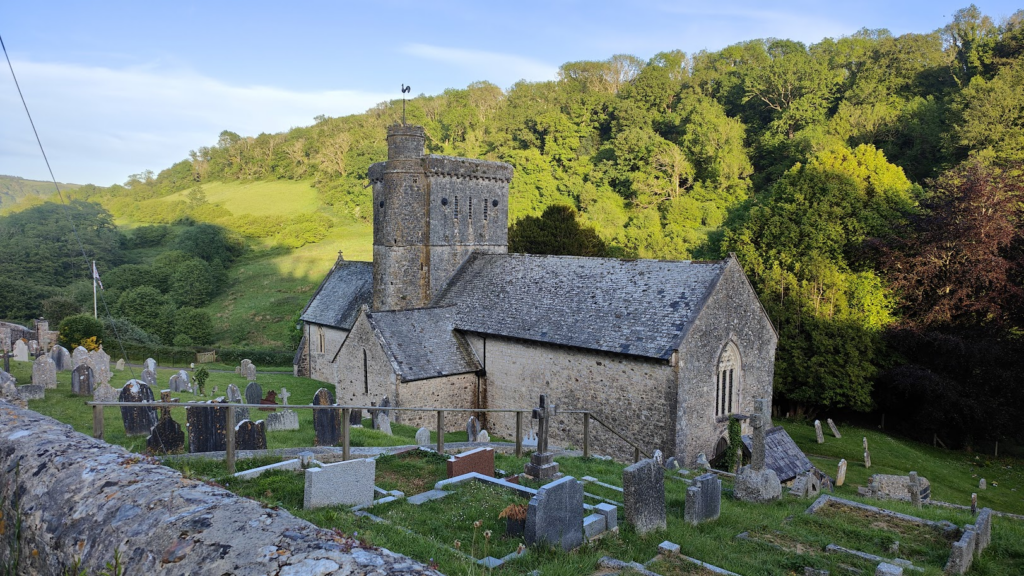
I was now almost there – perhaps another five miles to Colyton on this glorious evening. Time, then, for one more monstrous hill climb. I know all of this is entirely self-inflicted; but sometimes it feels otherwise. The tiny lane out of Branscombe reared up ahead of me and settled into a consistently abusive gradient between its high hedges. Progress was of the slowest imaginable nature; but I promise I cycled every inch of the way up. The final miles were a breeze, and I arrived in pretty little Colyton, away from the noise and the traffic, around 8.30pm to a hearty welcome from my Italian hostess. My amazing (and very affordable) ensuite room was in the attic of an old bakery, complete with four poster bed! The view through my skylight window looked straight across at the octagonal church tower. My bike stayed the night in the café below, and after a shower and a cup of tea, I repaired to the Kingfisher pub next door. The streets of Colyton were empty; but the pub was full. My excellent beer was brewed back down (very much down) the road in Branscombe and after this punishing day it slipped down all too easily. I was physically tired like I haven’t felt in a long time. But the climbing was over. For today at least.